Abyssinian Sand Terrier
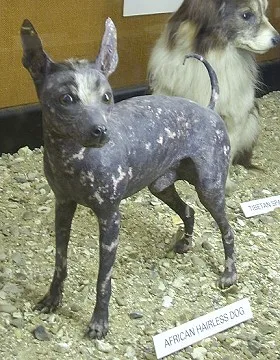
African hairless dogs, also known as Abyssinian sand terriers and African sand dogs among many other names, were hairless dogs from Africa. It is unknown if any examples still exist. This "breed" of dog is known for being “semi-wild”, meaning they tend to follow rather than live with the cattle breeders; though they occasionally serve as valuable companions on hunting trips. The many names of this “breed” include the words Egyptian, Abyssinian, and Zulu, which simply suggests that the genes for hairlessness have appeared independently in multiple areas of the continent as a cooling system in high heat. A number of early European accounts from Africa mention a small hairless dog. It was described as fast moving with a short, sharp bark, and it was said to be either sandy-coloured or blue-black. Contemporary reports indicated that it may or may not have had a crest of stiff hair on its head and a tuft of hair on its tail, although photographs of it fail to show any hair. Three examples were brought to Britain in 1833 and were displayed at the London Zoo as Egyptian Hairless Dogs; a specimen dating from 1903 is preserved at the Natural History Museum at Tring in Hertfordshire, England. These accounts of the African hairless dogs suggest that they were encountered across the continent. They are believed to be extinct, although no thorough search has been conducted across Africa to confirm that they no longer exist.
| Life Span | 10-14 years |
| Weight | 10-30 kg |
What to Know Before Buying an Abyssinian Sand Terrier
Finding a responsible Abyssinian Sand Terrier breeder requires more than browsing classified ads or responding to social media posts. The USDA requires any breeder who sells dogs commercially, especially those selling online or through third-party dealers, to hold a federal license and submit to regular inspections. A legitimate breeder should be willing to provide their USDA license number, invite you to visit their facility, and show you where the animals are housed and socialized.
Before committing to a purchase, ask the breeder for veterinary health records, vaccination documentation, and any genetic testing results relevant to the Abyssinian Sand Terrier. Reputable breeders will also ask you questions in return, about your living situation, experience with animals, and ability to provide long-term care. A breeder who asks no questions and is eager to ship an animal immediately is a significant red flag.
Use the search tool below to check whether any USDA-licensed facilities breeding Abyssinian Sand Terriers appear in our database. If they do, review their inspection history carefully. Look for patterns of violations, pay attention to severity levels, and compare their compliance grade with other breeders in the same state. This due diligence takes minutes and can save you from supporting a facility with documented animal welfare problems.
Looking for an Abyssinian Sand Terrier breeder?
Search our database of USDA-licensed facilities to find inspected breeders and check their compliance history.
Search USDA Breeders