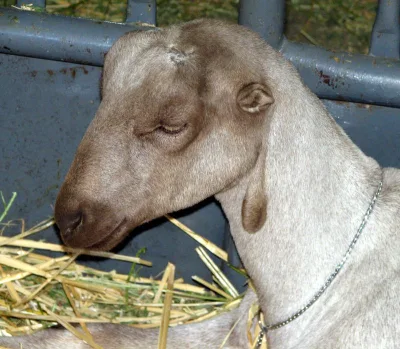
American Lamancha
American Lamancha, or more commonly, simply Lamancha or LaMancha goat, is a formally recognized breed of dairy goat, first bred in California by Mrs. Eula Fay Frey about 1927. Later she moved the herd to Glide, Oregon for further development. The Lamancha goat is a member of the Capra genus, specifically Capra aegagrus hircus (sometimes called Capra hircus), like all domestic goats. Lamancha goats are perhaps the most distinctive goat breed; easily recognizable by their very short ear pinnae. They are also known for their high milk production, and the comparatively high butterfat content in their milk, and people-loving temperament. The short-eared American Lamanchas first gained recognition as a distinct breed in the early 1950s, and the breed was registered formally on January 27, 1958 as "Lamancha or American Lamancha" goats. Approximately 200 animals were accepted at registration as its original stock. The first true American Lamancha goat registered was named Fay's Ernie, L-1. The LaMancha goat is the only breed of dairy goat developed in the United States. Although it is interesting folk lore and short eared goats do run throughout history, there is not a breed known as the Spanish LaMancha. The Term "American Lamancha" is an ADGA term which denotes a goat that is mostly Lamancha but has unknown genetics or varied genetics of other purebred goats.
| Life Span | 12-14 years |
| Weight | 25-75 kg |
What to Know Before Buying an American Lamancha
Finding a responsible American Lamancha breeder requires more than browsing classified ads or responding to social media posts. The USDA requires any breeder who sells goats commercially — especially those selling online or through third-party dealers — to hold a federal license and submit to regular inspections. A legitimate breeder should be willing to provide their USDA license number, invite you to visit their facility, and show you where the animals are housed and socialized.
Before committing to a purchase, ask the breeder for veterinary health records, vaccination documentation, and any genetic testing results relevant to the American Lamancha. Reputable breeders will also ask you questions in return — about your living situation, experience with animals, and ability to provide long-term care. A breeder who asks no questions and is eager to ship an animal immediately is a significant red flag.
Use the search tool below to check whether any USDA-licensed facilities breeding American Lamanchas appear in our database. If they do, review their inspection history carefully. Look for patterns of violations, pay attention to severity levels, and compare their compliance grade with other breeders in the same state. This due diligence takes minutes and can save you from supporting a facility with documented animal welfare problems.
Looking for an American Lamancha breeder?
Search our database of USDA-licensed facilities to find inspected breeders and check their compliance history.
Search USDA Breeders


