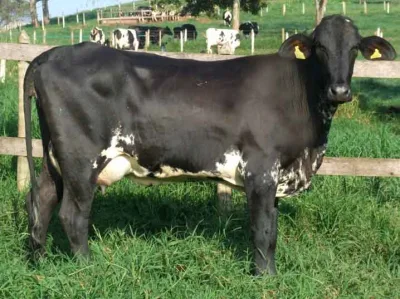
Andalusian Black cattle
The Andalusian Black (Spanish: Negra Andaluza), known locally as the Negra de las Campiñas, is a taurine breed of cattle that originated in west Andalusia, Spain. They are similar to the Avileña-Black Iberian breed, however the two are distinguished geographically. Andalusian Blacks are found in two main areas of west Andalusia: from Cordova to the foothills of the Sierra Morena; and in the provinces of Seville, Cádiz and Huelva. The first breed association was formed in Spain in 1996. There were only ~800 purebred individuals in 2007, their numbers reduced due to crossbreeding with other local Spanish breeds; the population increased to 1,883 by 2011. It is now classified as endangered, with 1,415 animals registered with the stud book. The breed's decline is due to mechanisation of agriculture, segmentation and isolation of subpopulations, crossbreeding, lack of genetic programs, and unstructured breeding efforts. The current breed association, formed in 2005, has undertaken a conservation program in partnership with the University of Cordoba to maintain the breed. They are a strong, hardy breed that is able to adapt to adverse weather conditions. The head can be straight to convex in profile. They have long, upward-curving horns. Females grow to 135cm at the withers and weigh 600-650kg. Males grow to 140cm at the withers and weigh 875-950kg. The coat colour is black. They have a calm and docile nature. Heifers reach sexual maturity between 18-20 months. They have a fertility rate of 80-95%, with a 1.15% chance of producing twins. They have a strong maternal instinct. A genetic defect common to the Andalusian breeds resulting in lowered fertility rate is present in Andalusian Blacks, however it likely occurs at a lower frequency within this breed compared to the others. They are prone to developing hypermetria. The breed was traditionally used as a draught animal, however it is now transitioning into a primarily beef breed due to the mechanisation of agriculture. They are also crossed with other breeds to produce beef. They are often kept on unimproved farms with rudimentary infrastructure.
| Life Span | 18-22 years |
| Weight | 450-900 kg |
What to Know Before Buying an Andalusian Black cattle
Finding a responsible Andalusian Black cattle breeder requires more than browsing classified ads or responding to social media posts. The USDA requires any breeder who sells cattles commercially — especially those selling online or through third-party dealers — to hold a federal license and submit to regular inspections. A legitimate breeder should be willing to provide their USDA license number, invite you to visit their facility, and show you where the animals are housed and socialized.
Before committing to a purchase, ask the breeder for veterinary health records, vaccination documentation, and any genetic testing results relevant to the Andalusian Black cattle. Reputable breeders will also ask you questions in return — about your living situation, experience with animals, and ability to provide long-term care. A breeder who asks no questions and is eager to ship an animal immediately is a significant red flag.
Use the search tool below to check whether any USDA-licensed facilities breeding Andalusian Black cattles appear in our database. If they do, review their inspection history carefully. Look for patterns of violations, pay attention to severity levels, and compare their compliance grade with other breeders in the same state. This due diligence takes minutes and can save you from supporting a facility with documented animal welfare problems.
Looking for an Andalusian Black cattle breeder?
Search our database of USDA-licensed facilities to find inspected breeders and check their compliance history.
Search USDA Breeders