Australian Cattle Dog
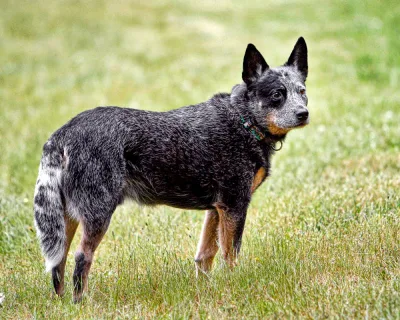
The Australian Cattle Dog, or simply Cattle Dog, is a breed of herding dog developed in Australia for droving cattle over long distances across rough terrain. This breed is a medium-sized, short-coated dog that occurs in two main colour forms. It has either red or black hair distributed fairly evenly through a white coat, which gives the appearance of a "red" or "blue" dog. As with dogs from other working breeds, the Australian Cattle Dog is energetic and intelligent with an independent streak. It responds well to structured training, particularly if it is interesting and challenging. It was originally bred to herd by biting, and is known to nip running children. It forms a strong attachment to its owners, and can be protective of them and their possessions. It is easy to groom and maintain, requiring little more than brushing during the shedding period. The most common health problems are deafness and progressive blindness (both hereditary conditions) and accidental injury. This particular breed originated from nineteenth century crosses between British herding dogs and the native dingo, producing a compact, muscular animal with a broad skull and short muzzle (selective breeding), built for intense drive and control of cattle, which later, in the early twentieth century, branched out a more refined strain. These early working dogs were bred solely for function and require high levels of activity and mental stimulation, making them unsuitable for sedentary home life. A new strain emerged in the early twentieth century through the introduction of Dalmatian and Kelpie bloodlines, creating a steadier temperament and a type better suited to be both worker and companion. From this period the breed became known as the Australian Cattle Dog as it was exported worldwide due to its popularity as a working dog. Both strains, working dog and companion, continue to be bred today. The breed is also employed successfully as a guide and assistance dog for people with disabilities, though it still requires substantial physical and mental stimulation to maintain a healthy balance. The Australian Cattle Dog has been nicknamed a "Red Heeler" or "Blue Heeler" on the basis of its colouring and practice of moving reluctant cattle by nipping at their heels. The nickname "Queensland Heeler" may have originated in a popular booklet, published in Victoria.
| Origin | Australia |
| Life Span | 12-16 years |
| Weight | 15-22 kg |
What to Know Before Buying an Australian Cattle Dog
Finding a responsible Australian Cattle Dog breeder requires more than browsing classified ads or responding to social media posts. The USDA requires any breeder who sells dogs commercially, especially those selling online or through third-party dealers, to hold a federal license and submit to regular inspections. A legitimate breeder should be willing to provide their USDA license number, invite you to visit their facility, and show you where the animals are housed and socialized.
Before committing to a purchase, ask the breeder for veterinary health records, vaccination documentation, and any genetic testing results relevant to the Australian Cattle Dog. Reputable breeders will also ask you questions in return, about your living situation, experience with animals, and ability to provide long-term care. A breeder who asks no questions and is eager to ship an animal immediately is a significant red flag.
Use the search tool below to check whether any USDA-licensed facilities breeding Australian Cattle Dogs appear in our database. If they do, review their inspection history carefully. Look for patterns of violations, pay attention to severity levels, and compare their compliance grade with other breeders in the same state. This due diligence takes minutes and can save you from supporting a facility with documented animal welfare problems.
Looking for an Australian Cattle Dog breeder?
Search our database of USDA-licensed facilities to find inspected breeders and check their compliance history.
Search USDA Breeders