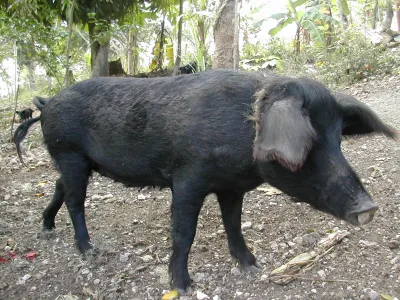
black Iberian pig
The Iberian pig, also known in Portugal as the Alentejo Pig, is a traditional breed of the domestic pig (Sus scrofa domesticus) that is native to the Iberian Peninsula. The Iberian pig, whose origins can probably be traced back to the Neolithic, when animal domestication started, is currently found in herds clustered in Spain and the central and southern part of Portugal. The most commonly accepted theory is that the pigs were first brought to the Iberian Peninsula by the Phoenicians from the Eastern Mediterranean coast (current-day Lebanon), where they interbred with wild boars. This cross gave rise to the ancestors of what are today Iberian pigs. The production of Iberian pig is deeply rooted to the Mediterranean ecosystem. It is a rare example in world swine production where the pig contributes so decisively to the preservation of the ecosystem. The Iberian breed is currently one of the few examples of a domesticated breed which has adapted to a pastoral setting where the land is particularly rich in natural resources, in this case acorns from the holm oak, gall oak and cork oak. The numbers of the Iberian breed have been drastically reduced since 1960 due to several factors such as the outbreak of African swine fever and the lowered value of animal fats. In the past few years, however, the production of pigs of the Iberian type has increased to satisfy a renewed demand for top-quality meat and cured products. At the same time, breed specialisation has led to the disappearance of some ancestral varieties. This traditional breed exhibits a good appetite and propensity to obesity, including a great capacity to accumulate intramuscular and epidermal fat. The high intramuscular fat is what produces the typical marbling; this, together with traditional feeding based on acorns, is what makes its ham taste so special. Iberian pigs are interesting from a human biomedical perspective because they present high feed intake and propensity to obesity, compatible with high values of serum leptin. The Iberian pig can be either red or dark in colour, if black ranging from dark to grey, with little or no hair and a lean body, thus giving rise to the familiar name pata negra, or "black hoof". In traditional management, animals ranged freely in sparse oak forest (dehesa in Spain, montado in Portugal), they are constantly moving around and therefore burn more calories than confined pigs. This, in turn, produces the fine bones typical of this kind of jamón ibérico. At least a hectare of healthy dehesa is needed to raise a single pig, and since the trees may be several hundred years old, the prospects for reforesting lost dehesa are slim at best. True dehesa is a richly diverse habitat with four different types of oak that are crucial in the production of prime-quality ham. The bulk of the acorn harvest comes from the holm oak (Quercus rotundifolia) from November to February, but the season would be too short without the earlier harvests of Pyrenean oak (Quercus pyrenaica) and Portuguese or gall oak (Quercus lusitanica), and the late cork oak (Quercus suber) season, which between them extend the acorn-production period from September almost to April.
| Life Span | 15-20 years |
| Weight | 50-350 kg |
What to Know Before Buying a black Iberian pig
Finding a responsible black Iberian pig breeder requires more than browsing classified ads or responding to social media posts. The USDA requires any breeder who sells pigs commercially — especially those selling online or through third-party dealers — to hold a federal license and submit to regular inspections. A legitimate breeder should be willing to provide their USDA license number, invite you to visit their facility, and show you where the animals are housed and socialized.
Before committing to a purchase, ask the breeder for veterinary health records, vaccination documentation, and any genetic testing results relevant to the black Iberian pig. Reputable breeders will also ask you questions in return — about your living situation, experience with animals, and ability to provide long-term care. A breeder who asks no questions and is eager to ship an animal immediately is a significant red flag.
Use the search tool below to check whether any USDA-licensed facilities breeding black Iberian pigs appear in our database. If they do, review their inspection history carefully. Look for patterns of violations, pay attention to severity levels, and compare their compliance grade with other breeders in the same state. This due diligence takes minutes and can save you from supporting a facility with documented animal welfare problems.
Looking for a black Iberian pig breeder?
Search our database of USDA-licensed facilities to find inspected breeders and check their compliance history.
Search USDA Breeders