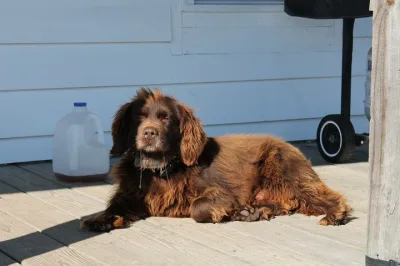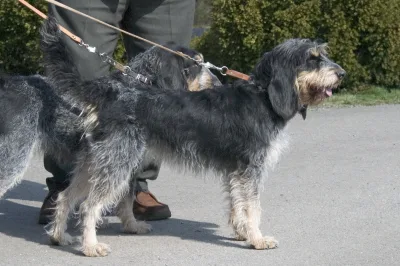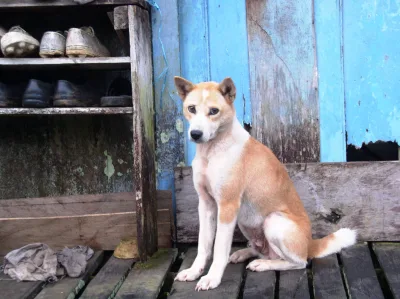
Borneo dog
The New Guinea singing dog or New Guinea Highland dog (Canis lupus hallstromi, Canis hallstromi, Canis lupus dingo, or Canis familiaris) is an ancient (basal) lineage of dog found in the New Guinea Highlands, on the island of New Guinea. Once considered to be a separate species in its own right, under the name Canis hallstromi, it is closely related to the Australian dingo. The dog is relatively unusual among canines; it is one of the few to be considered "barkless", and is known for the unusual "yodel" style of vocalizing that gives it its name. In 1989, the Australian mammalogist Tim Flannery took a photo of a black-and-tan dog in Telefomin District. He noted that these dogs lived with local tribal peoples in the mountains, and that feral populations lived in the alpine and sub-alpine grasslands of the Star Mountains and the Wharton Range. The photo was published in his book, Mammals of New Guinea. In 2012, Australian wilderness-adventure guide Tom Hewett took a photo of a tawny, thick-coated dog in the Puncak Mandala region of West Papua, Indonesia. In 2016, a literature review found no definitive evidence that the earliest possible dogs, within captive populations of New Guinea singing dogs, were wild animals; successive generations of puppies were raised as members of village populations, thus being domestic dogs. In 2020, a genetic study found that the New Guinea Highland wild dogs were genetically basal to the dingo and the New Guinea singing dog, and therefore the potential originator of both.
| Life Span | 10-14 years |
| Weight | 10-30 kg |
What to Know Before Buying a Borneo dog
Finding a responsible Borneo dog breeder requires more than browsing classified ads or responding to social media posts. The USDA requires any breeder who sells dogs commercially, especially those selling online or through third-party dealers, to hold a federal license and submit to regular inspections. A legitimate breeder should be willing to provide their USDA license number, invite you to visit their facility, and show you where the animals are housed and socialized.
Before committing to a purchase, ask the breeder for veterinary health records, vaccination documentation, and any genetic testing results relevant to the Borneo dog. Reputable breeders will also ask you questions in return, about your living situation, experience with animals, and ability to provide long-term care. A breeder who asks no questions and is eager to ship an animal immediately is a significant red flag.
Use the search tool below to check whether any USDA-licensed facilities breeding Borneo dogs appear in our database. If they do, review their inspection history carefully. Look for patterns of violations, pay attention to severity levels, and compare their compliance grade with other breeders in the same state. This due diligence takes minutes and can save you from supporting a facility with documented animal welfare problems.
Looking for a Borneo dog breeder?
Search our database of USDA-licensed facilities to find inspected breeders and check their compliance history.
Search USDA Breeders