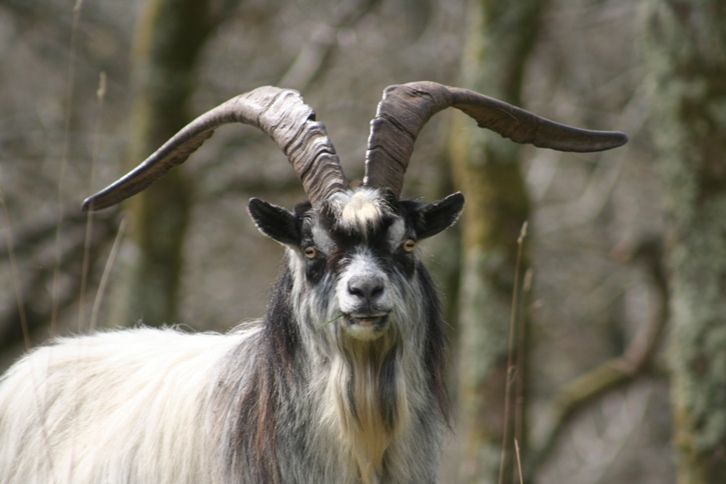
British Primitive goat
The British primitive goat is a landrace of domestic goat native to Great Britain and Ireland, and is the original goat of the region. It is considered a rare breed, existing as several, isolated feral herds, as some captive populations in zoological parks and nature reserves, and breeding stock on some private farms operated by groups of rare-breed enthusiasts. As few as 1,200 individual British primitives may remain. The variety is also referred to as the British native goat, the old British goat, the old English goat or the British landrace goat, among more specific names (English, Irish, Scottish or Scotch, and Welsh primitive or landrace goat, etc.) It descends from the earliest goats brought to the region in the Neolithic era, around 3,000 BCE. It is classified in the Northern breed group of goats. A population in Northumberland is sometimes referred to as the Cheviot goat. The British primitive is among the foundation stock of some modern standardised breeds, including the Anglo-Nubian goat. The breed is comparatively small, with commensurately low milk production. It is hardy and wiry haired, adapted to rough terrain and weather, and able to subsist and breed on its own without human intervention.
| Life Span | 12-14 years |
| Weight | 25-75 kg |
What to Know Before Buying a British Primitive goat
Finding a responsible British Primitive goat breeder requires more than browsing classified ads or responding to social media posts. The USDA requires any breeder who sells goats commercially — especially those selling online or through third-party dealers — to hold a federal license and submit to regular inspections. A legitimate breeder should be willing to provide their USDA license number, invite you to visit their facility, and show you where the animals are housed and socialized.
Before committing to a purchase, ask the breeder for veterinary health records, vaccination documentation, and any genetic testing results relevant to the British Primitive goat. Reputable breeders will also ask you questions in return — about your living situation, experience with animals, and ability to provide long-term care. A breeder who asks no questions and is eager to ship an animal immediately is a significant red flag.
Use the search tool below to check whether any USDA-licensed facilities breeding British Primitive goats appear in our database. If they do, review their inspection history carefully. Look for patterns of violations, pay attention to severity levels, and compare their compliance grade with other breeders in the same state. This due diligence takes minutes and can save you from supporting a facility with documented animal welfare problems.
Looking for a British Primitive goat breeder?
Search our database of USDA-licensed facilities to find inspected breeders and check their compliance history.
Search USDA Breeders