Californian rabbit
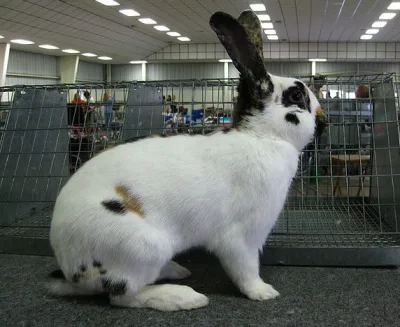
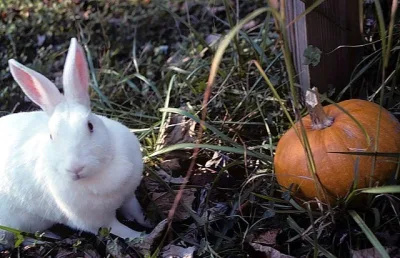
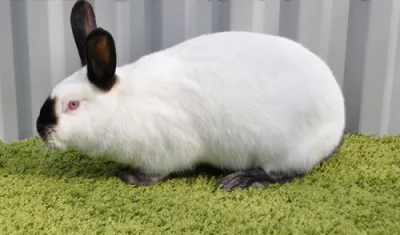
The Californian, also known as the California White, is a breed of domestic rabbit developed for the fur and meat industries by George S. West of Lynwood, California, starting in 1923. West maintained a herd of 300 genetically pure New Zealand Whites (with no Angora genes), which he began crossing with Standard Chinchilla rabbits for their dense coat and Himalayan rabbits (from which the Californian's markings come). This new breed, named after the state of its origin, was first shown in 1928, and a standard was accepted by the American Rabbit Breeders Association (ARBA) in 1939. Today, the Californian rabbit is the second most popular meat-producing breed in the world after the New Zealand rabbit. The fur quality allows this rabbit to also be classified as a fancy breed. ARBA recognizes only the original "standard" color variety of white with dark points, while the British Rabbit Council (BRC) recognizes four color varieties: normal, chocolate, blue, or lilac points. The BRC standard calls for a desired weight of 9.5 pounds (4.3 kg) with a minimum of 7.5 pounds (3.4 kg), while ARBA accepts a maximum weight of 10.5 pounds (4.8 kg). Californians are an excellent meat rabbit breed, with a good meat-to-bone ratio. They produce large litters of 8-12 kits, which have a fast growth rate to fryer size (4-5lbs) in 8-12 weeks. They have dense, plush coats.
| Life Span | 8-12 years |
| Weight | 2-5 kg |
What to Know Before Buying a Californian rabbit
Finding a responsible Californian rabbit breeder requires more than browsing classified ads or responding to social media posts. The USDA requires any breeder who sells rabbits commercially, especially those selling online or through third-party dealers, to hold a federal license and submit to regular inspections. A legitimate breeder should be willing to provide their USDA license number, invite you to visit their facility, and show you where the animals are housed and socialized.
Before committing to a purchase, ask the breeder for veterinary health records, vaccination documentation, and any genetic testing results relevant to the Californian rabbit. Reputable breeders will also ask you questions in return, about your living situation, experience with animals, and ability to provide long-term care. A breeder who asks no questions and is eager to ship an animal immediately is a significant red flag.
Use the search tool below to check whether any USDA-licensed facilities breeding Californian rabbits appear in our database. If they do, review their inspection history carefully. Look for patterns of violations, pay attention to severity levels, and compare their compliance grade with other breeders in the same state. This due diligence takes minutes and can save you from supporting a facility with documented animal welfare problems.
Looking for a Californian rabbit breeder?
Search our database of USDA-licensed facilities to find inspected breeders and check their compliance history.
Search USDA Breeders