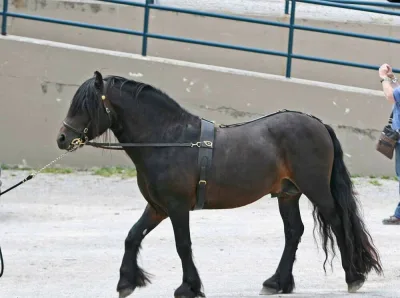
Danube Delta horse
The Danube Delta horses are a population of feral horses in Romania. They live in and around Letea Forest in the Danube Delta, between the Sulina and Chilia branches of the Danube. About 4000 feral horses live in the Danube Delta, 2000 of them in the Letea nature reserve, where on one hand, they are among the last remaining "wild" (feral) horses living at large on the European continent, but are also deemed to be a threat to the flora of the forest, including some plants on the IUCN Red List of Threatened Species. Although there have been feral horses in the region for hundreds of years, their numbers greatly increased after the collective farms were closed down in 1990 and the horses belonging to them were freed. The Letea population is not regulated and there are concerns that overgrazing is a looming problem. The horses on Letea Island are black or bay, without white spots. They stand between 1.45 and 1.50 m (14.1 and 14.3 hands) and are strongly built. They are different from the smaller horses of Sfântu Gheorghe, which is nearby. They are not of a riding horse build, but are built like the working horses of Hungary. In 2002, some of these horses were captured and transported to Italy for slaughter. Some organizations objected to removal, holding that the horses had value in being adapted to the location and possessing natural social behavior. Another push for removal and slaughter began in 2009, but horses cannot be currently removed from the area because a number of animals carry equine infectious anemia. Therefore, according to Romanian regulation, they are not allowed to be taken out of the quarantine area. Currently, there is an ongoing project, in collaboration with the World Wide Fund for Nature, seeking to find a way to remove these horses. While some organizations object to total removal and advocate for some animals to remain, others are attempting to find a different preserve for the horses to live.
| Life Span | 25-30 years |
| Weight | 380-550 kg |
What to Know Before Buying a Danube Delta horse
Finding a responsible Danube Delta horse breeder requires more than browsing classified ads or responding to social media posts. The USDA requires any breeder who sells horses commercially — especially those selling online or through third-party dealers — to hold a federal license and submit to regular inspections. A legitimate breeder should be willing to provide their USDA license number, invite you to visit their facility, and show you where the animals are housed and socialized.
Before committing to a purchase, ask the breeder for veterinary health records, vaccination documentation, and any genetic testing results relevant to the Danube Delta horse. Reputable breeders will also ask you questions in return — about your living situation, experience with animals, and ability to provide long-term care. A breeder who asks no questions and is eager to ship an animal immediately is a significant red flag.
Use the search tool below to check whether any USDA-licensed facilities breeding Danube Delta horses appear in our database. If they do, review their inspection history carefully. Look for patterns of violations, pay attention to severity levels, and compare their compliance grade with other breeders in the same state. This due diligence takes minutes and can save you from supporting a facility with documented animal welfare problems.
Looking for a Danube Delta horse breeder?
Search our database of USDA-licensed facilities to find inspected breeders and check their compliance history.
Search USDA Breeders