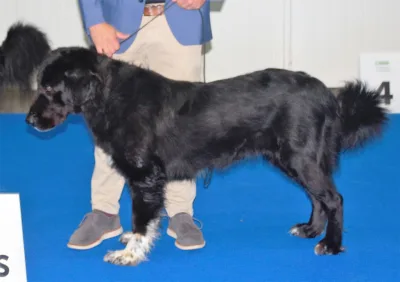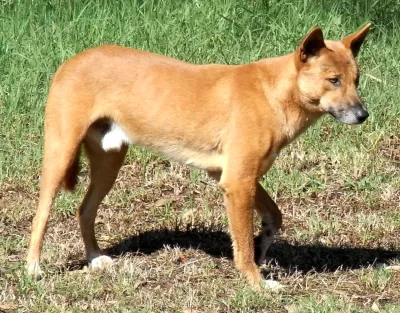
dingo
The dingo (either included in the species Canis familiaris, or considered one of the following independent taxa: Canis familiaris dingo, Canis dingo, or Canis lupus dingo) is a lineage of dog found in Australia. Its taxonomic classification is debated as indicated by the variety of scientific names presently applied in different publications. It is variously considered a form of domestic dog not warranting recognition as a subspecies, a subspecies of dog or wolf, or a full species in its own right. The dingo is a medium-sized canine that possesses a lean, hardy body adapted for speed, agility, and stamina. The dingo's three main coat colourations are light ginger or tan, black and tan, or creamy white. The skull is wedge-shaped and appears large in proportion to the body. The dingo is closely related to the New Guinea singing dog: their lineage split early from the lineage that led to today's domestic dogs, and can be traced back through Maritime Southeast Asia to Asia. The oldest remains of dingoes discovered in Australia are around 3,500 years old. A dingo pack usually consists of a mated pair, their offspring from the current year, and sometimes offspring from the previous year.
| Life Span | 10-14 years |
| Weight | 10-30 kg |
What to Know Before Buying a dingo
Finding a responsible dingo breeder requires more than browsing classified ads or responding to social media posts. The USDA requires any breeder who sells dogs commercially, especially those selling online or through third-party dealers, to hold a federal license and submit to regular inspections. A legitimate breeder should be willing to provide their USDA license number, invite you to visit their facility, and show you where the animals are housed and socialized.
Before committing to a purchase, ask the breeder for veterinary health records, vaccination documentation, and any genetic testing results relevant to the dingo. Reputable breeders will also ask you questions in return, about your living situation, experience with animals, and ability to provide long-term care. A breeder who asks no questions and is eager to ship an animal immediately is a significant red flag.
Use the search tool below to check whether any USDA-licensed facilities breeding dingos appear in our database. If they do, review their inspection history carefully. Look for patterns of violations, pay attention to severity levels, and compare their compliance grade with other breeders in the same state. This due diligence takes minutes and can save you from supporting a facility with documented animal welfare problems.
Looking for a dingo breeder?
Search our database of USDA-licensed facilities to find inspected breeders and check their compliance history.
Search USDA Breeders