Dumfriesshire Hound
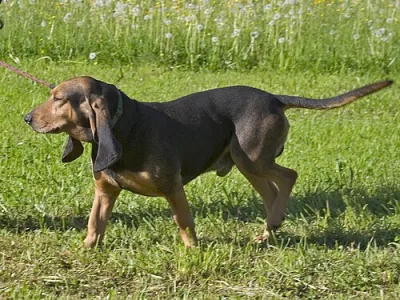
Dumfriesshire Black and Tan Foxhounds were a pack of foxhounds kennelled at Glenholm Kennels, Kettleholm, near Lockerbie until they were disbanded in 2001. They were established by Sir John Buchanan Jardine, author of Hounds of the World (1937), after the First World War. The hounds are believed to have originally been created by crossing Bloodhound/Grand Bleu de Gascogne/English Foxhound. They were larger than standard foxhounds and were black and tan. There is a pack descended from them in France, known as Equipage de la Roirie, and they are used also by the Equipage Pique Avant Nivernais as staghounds, along with the Français Blanc et Noir hound. These large hounds were also crossed with the Dumfriesshire otterhounds during the foundation of the Otterhound pack. Since the Second World War, the Dumfriessire hound has been used to improve speed and agility in several clean boot hunting bloodhound packs; as one example, Eric Furness introduced Dumfriesshire hound blood into his Peak bloodhounds. Dumfriesshire hounds starred as bloodhounds in The Thirty Nine Steps with Robert Powell, which was partly filmed in the Kettleholm area.
| Life Span | 10-14 years |
| Weight | 10-30 kg |
What to Know Before Buying a Dumfriesshire Hound
Finding a responsible Dumfriesshire Hound breeder requires more than browsing classified ads or responding to social media posts. The USDA requires any breeder who sells dogs commercially, especially those selling online or through third-party dealers, to hold a federal license and submit to regular inspections. A legitimate breeder should be willing to provide their USDA license number, invite you to visit their facility, and show you where the animals are housed and socialized.
Before committing to a purchase, ask the breeder for veterinary health records, vaccination documentation, and any genetic testing results relevant to the Dumfriesshire Hound. Reputable breeders will also ask you questions in return, about your living situation, experience with animals, and ability to provide long-term care. A breeder who asks no questions and is eager to ship an animal immediately is a significant red flag.
Use the search tool below to check whether any USDA-licensed facilities breeding Dumfriesshire Hounds appear in our database. If they do, review their inspection history carefully. Look for patterns of violations, pay attention to severity levels, and compare their compliance grade with other breeders in the same state. This due diligence takes minutes and can save you from supporting a facility with documented animal welfare problems.
Looking for a Dumfriesshire Hound breeder?
Search our database of USDA-licensed facilities to find inspected breeders and check their compliance history.
Search USDA Breeders