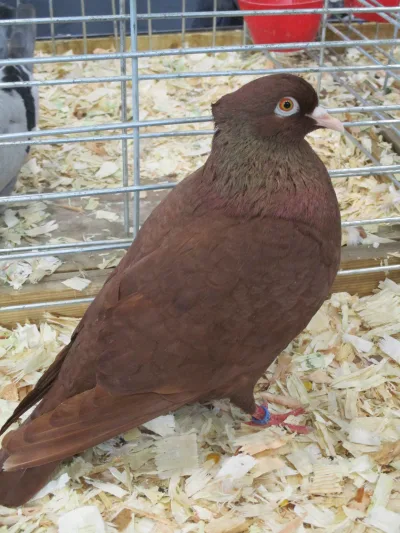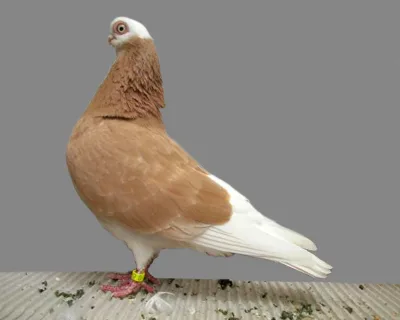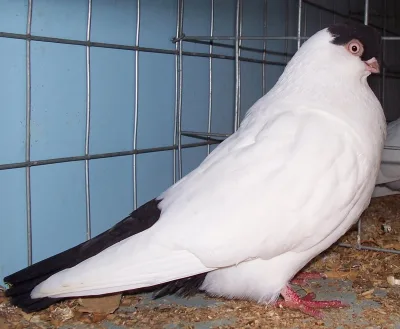
Dutch Helmet
The Dutch Helmet or Nederlandse Helmduif is a breed of fancy pigeon created through generations of selective breeding for the purpose of highflying. It is recognised as a member of the Tumblers and Highflyers (EE0800 or individually as NL/0825) by the European Standard Committee for Pigeons. It is recognised under the Flyers breed group by the US National Pigeon Association. Dutch helmets, and helmets in general, are characterised by fully white bodies with colouration being present only on the tail feathers and on the top of the head, earning the breed its name. The colouration of the 'helmet' and tail feathers can come in multiple variations, including black, reddish-brown, yellow, and blue. The tail feathers consist of twelve feathers which overlay tightly and rarely part or fan. The wingtips are white and rest on the tail feathers. The legs are unfeathered past the knee and a hot pink or red colour. Dutch helmets have coloured irises with black pupils and narrow flesh toned rims around the eyes. The beak is typically average sized with a pinkish or reddish hue and occasionally a white lower mandible. The Dutch helmet is incredibly well-loved in the Netherlands and has garnered cultural significance over its history. It was selected pigeon breed of the year in 2023.
| Life Span | 6-15 years |
| Weight | 0.2-0.5 kg |
What to Know Before Buying a Dutch Helmet
Finding a responsible Dutch Helmet breeder requires more than browsing classified ads or responding to social media posts. The USDA requires any breeder who sells pigeons commercially, especially those selling online or through third-party dealers, to hold a federal license and submit to regular inspections. A legitimate breeder should be willing to provide their USDA license number, invite you to visit their facility, and show you where the animals are housed and socialized.
Before committing to a purchase, ask the breeder for veterinary health records, vaccination documentation, and any genetic testing results relevant to the Dutch Helmet. Reputable breeders will also ask you questions in return, about your living situation, experience with animals, and ability to provide long-term care. A breeder who asks no questions and is eager to ship an animal immediately is a significant red flag.
Use the search tool below to check whether any USDA-licensed facilities breeding Dutch Helmets appear in our database. If they do, review their inspection history carefully. Look for patterns of violations, pay attention to severity levels, and compare their compliance grade with other breeders in the same state. This due diligence takes minutes and can save you from supporting a facility with documented animal welfare problems.
Looking for a Dutch Helmet breeder?
Search our database of USDA-licensed facilities to find inspected breeders and check their compliance history.
Search USDA Breeders