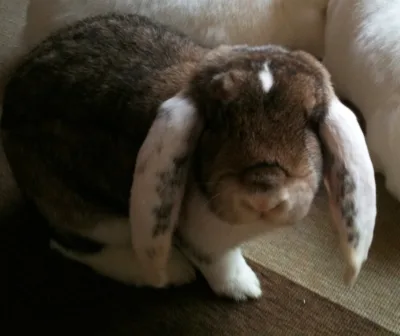
German Lop
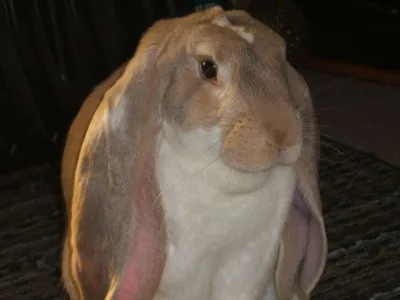
The German Lop rabbit is a recognised breed by the British Rabbit Council (BRC). It is a very chunky and fat Lop rabbit. The BRC Breed Standard specification sets out the following attributes required for a Rabbit to be declared as a German Lop. Type - Very thick, hefty and meaty. The neck on a good German Lop should never be visible. Ideally it should be equally as broad in the shoulder as the hindquarters. From a short nape the line of the back should rise in a slight curve to a well-muscled rump which should be short, stout, and well rounded. The front legs are short, straight and thick. The hind legs should lie parallel to the rump and not jutting out when resting. A dewlap in does is highly encouraged. Head - The head should be strongly developed with a distinct width between the eyes. The German Lop should have a Roman nose appearance with well-developed cheeks. Ears - The ears should be broad, thick and of good substance, they rise from a strong ridge called the crown on top of the head, carried closely to the cheeks, with the openings turned inwards. The ears should hang down straight just behind the eyes without either being carried forwards or backwards. Ear length, measured across the skull minimum 27.96 cm - maximum 35.5 cm. (11- 14in maximum).
| Life Span | 8-12 years |
| Weight | 2-5 kg |
What to Know Before Buying a German Lop
Finding a responsible German Lop breeder requires more than browsing classified ads or responding to social media posts. The USDA requires any breeder who sells rabbits commercially, especially those selling online or through third-party dealers, to hold a federal license and submit to regular inspections. A legitimate breeder should be willing to provide their USDA license number, invite you to visit their facility, and show you where the animals are housed and socialized.
Before committing to a purchase, ask the breeder for veterinary health records, vaccination documentation, and any genetic testing results relevant to the German Lop. Reputable breeders will also ask you questions in return, about your living situation, experience with animals, and ability to provide long-term care. A breeder who asks no questions and is eager to ship an animal immediately is a significant red flag.
Use the search tool below to check whether any USDA-licensed facilities breeding German Lops appear in our database. If they do, review their inspection history carefully. Look for patterns of violations, pay attention to severity levels, and compare their compliance grade with other breeders in the same state. This due diligence takes minutes and can save you from supporting a facility with documented animal welfare problems.
Looking for a German Lop breeder?
Search our database of USDA-licensed facilities to find inspected breeders and check their compliance history.
Search USDA Breeders