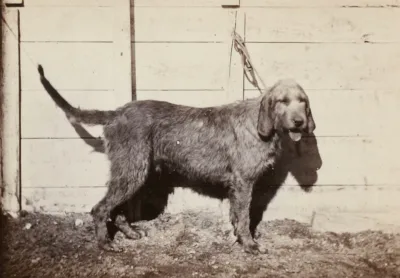
Grand Fauve de Bretagne
The Grand Fauve de Bretagne was a breed of scenthound from Brittany used to hunt wolves and wild boar. The Grand Fauve de Bretagne were large rough-coated hounds, their coats were short, dense and harsh, and they were a uniform pale golden-brown in colour. Grand Fauve de Bretagnes were renowned for their unruly natures, being very difficult to control; their temperament suited them for hunting dangerous game like wolf and wild boar, but due to their unruliness they were also known to kill sheep and goats against their huntsman's wishes. The Fauve de Bretagne hounds were known in France from the 16th century, in 1520 Francis I of France was presented with a hound "Miraud" by the Breton Admiral Claude d'Annebault; Francis subsequently kept a pack. In 1570, Charles IX of France in his La Chasse Royale listed the Fauve de Bretagne as one of the principal breeds of French hounds. With the extirpation of wolves from much of France in the mid-19th century these hounds became rare; by 1873 it was recorded that purebred examples were hard to find and it was believed only three packs retained the bloodlines; in subsequent decades the breed became extinct. Some Grand Fauve de Bretagne hounds had been crossed with Briquet Griffon Vendéens to create the Griffon Fauve de Bretagne; these smaller hounds retain much of the appearance of the Grand Fauve de Bretagne.
| Life Span | 10-14 years |
| Weight | 10-30 kg |
What to Know Before Buying a Grand Fauve de Bretagne
Finding a responsible Grand Fauve de Bretagne breeder requires more than browsing classified ads or responding to social media posts. The USDA requires any breeder who sells dogs commercially, especially those selling online or through third-party dealers, to hold a federal license and submit to regular inspections. A legitimate breeder should be willing to provide their USDA license number, invite you to visit their facility, and show you where the animals are housed and socialized.
Before committing to a purchase, ask the breeder for veterinary health records, vaccination documentation, and any genetic testing results relevant to the Grand Fauve de Bretagne. Reputable breeders will also ask you questions in return, about your living situation, experience with animals, and ability to provide long-term care. A breeder who asks no questions and is eager to ship an animal immediately is a significant red flag.
Use the search tool below to check whether any USDA-licensed facilities breeding Grand Fauve de Bretagnes appear in our database. If they do, review their inspection history carefully. Look for patterns of violations, pay attention to severity levels, and compare their compliance grade with other breeders in the same state. This due diligence takes minutes and can save you from supporting a facility with documented animal welfare problems.
Looking for a Grand Fauve de Bretagne breeder?
Search our database of USDA-licensed facilities to find inspected breeders and check their compliance history.
Search USDA Breeders