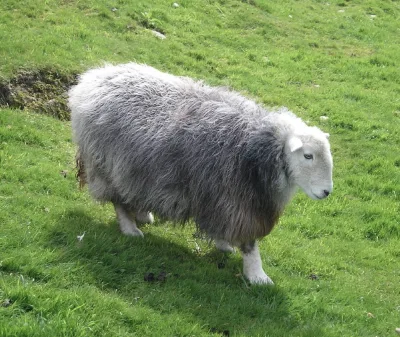
Herdwick
The Herdwick is a breed of domestic sheep native to the Lake District in North West England. The name "Herdwick" is derived from the Old Norse herdvyck, meaning sheep pasture. Though low in lambing capacity and perceived wool quality when compared to more common commercial breeds, Herdwicks are prized for their robust health, their ability to live solely on forage, and their tendency to be territorial and not to stray over the difficult upland terrain of the Lake District. It is considered that up to 99% of all Herdwick sheep are commercially farmed in the central and western Lake District. The wool of a Herdwick has unique qualities relating to durability. Thick bristle type fibres will often protrude from garments made from the wool, forming a protective layer in blizzards—most likely the same qualities that protect the sheep in similar conditions. Herdwicks have been known to survive under a blanket of snow for three days while eating their own wool. Severely threatened by the 2001 outbreak of foot-and-mouth disease in England and Wales, the breed has survived due to the intent to preserve this unique animal as a crucial part of traditional Lakeland agriculture. Still far fewer in number than most commercial breeds, Herdwicks survive largely due to farming subsidies.
| Life Span | 10-12 years |
| Weight | 45-160 kg |
What to Know Before Buying a Herdwick
Finding a responsible Herdwick breeder requires more than browsing classified ads or responding to social media posts. The USDA requires any breeder who sells sheeps commercially — especially those selling online or through third-party dealers — to hold a federal license and submit to regular inspections. A legitimate breeder should be willing to provide their USDA license number, invite you to visit their facility, and show you where the animals are housed and socialized.
Before committing to a purchase, ask the breeder for veterinary health records, vaccination documentation, and any genetic testing results relevant to the Herdwick. Reputable breeders will also ask you questions in return — about your living situation, experience with animals, and ability to provide long-term care. A breeder who asks no questions and is eager to ship an animal immediately is a significant red flag.
Use the search tool below to check whether any USDA-licensed facilities breeding Herdwicks appear in our database. If they do, review their inspection history carefully. Look for patterns of violations, pay attention to severity levels, and compare their compliance grade with other breeders in the same state. This due diligence takes minutes and can save you from supporting a facility with documented animal welfare problems.
Looking for a Herdwick breeder?
Search our database of USDA-licensed facilities to find inspected breeders and check their compliance history.
Search USDA Breeders