Italian Owl
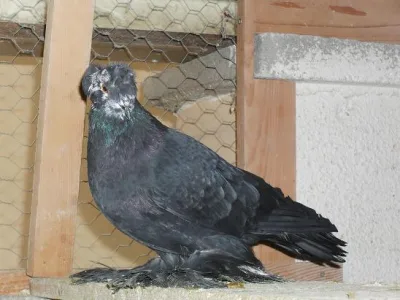
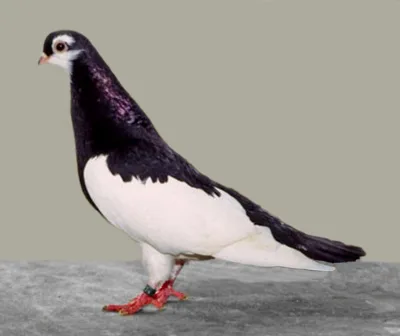
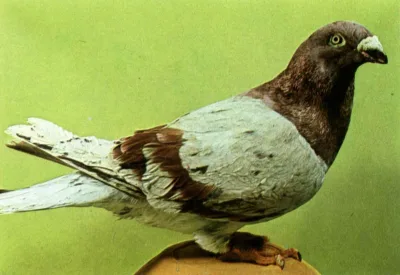
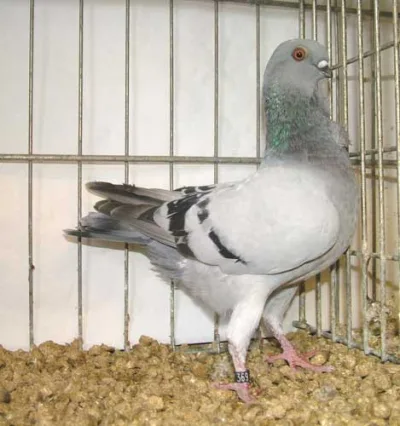
The Italian Owl is one of the many breeds of fancy pigeons developed over years, often decades, of selective breeding. Like other breeds of fancy pigeons, Italian Owls are descendants of the domesticated rock pigeon (Columba livia). Italian Owls are noted for their proud horizontal stance, relatively small size compared with many other fancy breeds, broad and rounded breast that displays a prominent chest frill, a somewhat flat head that is rounded at the front and back, a rather short tail, and orange eyes unless a bird is white or pied, in which cases the eyes are "bull" (black). Healthy Italian Owls are perky birds that stand on their toes and give the appearance that they are ready to spring forward. The breed is represented in the United States by the Valencian Figurita and Italian Owl Club , and in Germany by the Sonderverein der Züchter Italienische Mövchen . Italian Owls are bred in many beautiful colors. These include blue, silver, red, and yellow in the major three patterns of check, barred and bar-less; recessive reds, yellows and whites (these recessive birds are completely red, yellow or white and have no pattern); spread blacks (completely black birds); pied in the major colors and in various patterns; gold-collared birds in the major colors and patterns; grizzle; and almond, andalusian and indigo. Photographs of the breed in these various colors and lists of breeders can be found at the speciality club web sites.
| Life Span | 6-15 years |
| Weight | 0.2-0.5 kg |
What to Know Before Buying an Italian Owl
Finding a responsible Italian Owl breeder requires more than browsing classified ads or responding to social media posts. The USDA requires any breeder who sells pigeons commercially, especially those selling online or through third-party dealers, to hold a federal license and submit to regular inspections. A legitimate breeder should be willing to provide their USDA license number, invite you to visit their facility, and show you where the animals are housed and socialized.
Before committing to a purchase, ask the breeder for veterinary health records, vaccination documentation, and any genetic testing results relevant to the Italian Owl. Reputable breeders will also ask you questions in return, about your living situation, experience with animals, and ability to provide long-term care. A breeder who asks no questions and is eager to ship an animal immediately is a significant red flag.
Use the search tool below to check whether any USDA-licensed facilities breeding Italian Owls appear in our database. If they do, review their inspection history carefully. Look for patterns of violations, pay attention to severity levels, and compare their compliance grade with other breeders in the same state. This due diligence takes minutes and can save you from supporting a facility with documented animal welfare problems.
Looking for an Italian Owl breeder?
Search our database of USDA-licensed facilities to find inspected breeders and check their compliance history.
Search USDA Breeders