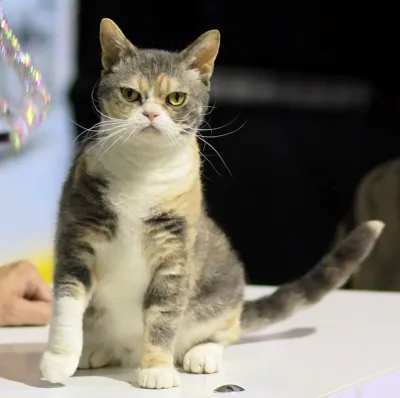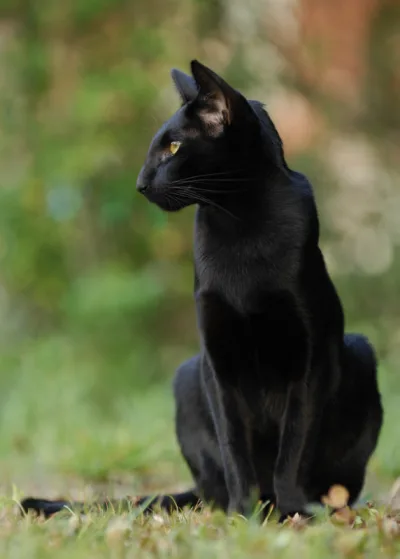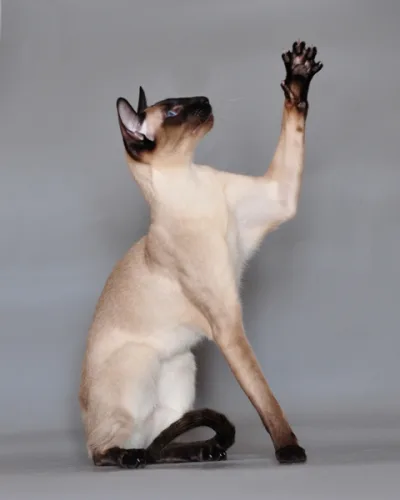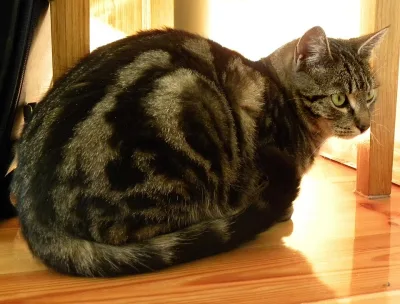
Korat
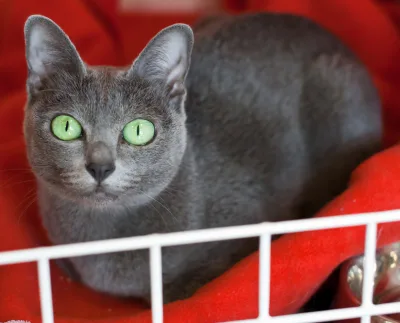
The Korat cat (Thai: โคราช, มาเลศ, สีสวาด, RTGS: Khorat, Malet, Si sawat) is a silver-tipped blue-grey, short-haired breed of domestic cat with a small to medium build and a low percentage of body fat. Its body is semi-cobby, and unusually heavy for its size. It is an intelligent and playful active cat that forms strong bonds with people and is very vocal, with a sound different from other breeds. Among the Korat's distinguishing characteristics are its heart-shaped head, its large green eyes. Its front paws are shorter than the back paws. The Korat is a natural breed, and one of the oldest stable cat breeds, and one of the very few that has not changed its appearance throughout centuries. Originating in Phimai, Thailand, it is named after its province of origin, Nakhon Ratchasima Province (typically called "Korat" by the Thai people). In Thailand, the breed is known as Si sawat, meaning "colour of the sawat seed". The Korat is known colloquially as the "good luck cat". Traditionally, they are given in pairs to newlyweds or people who are highly esteemed, for good luck. Until recently, Korats were not sold, but only given as gifts.
| Origin | Thailand |
| Life Span | 10-15 years |
| Weight | 3-5 kg |
What to Know Before Buying a Korat
Finding a responsible Korat breeder requires more than browsing classified ads or responding to social media posts. The USDA requires any breeder who sells cats commercially, especially those selling online or through third-party dealers, to hold a federal license and submit to regular inspections. A legitimate breeder should be willing to provide their USDA license number, invite you to visit their facility, and show you where the animals are housed and socialized.
Before committing to a purchase, ask the breeder for veterinary health records, vaccination documentation, and any genetic testing results relevant to the Korat. Reputable breeders will also ask you questions in return, about your living situation, experience with animals, and ability to provide long-term care. A breeder who asks no questions and is eager to ship an animal immediately is a significant red flag.
Use the search tool below to check whether any USDA-licensed facilities breeding Korats appear in our database. If they do, review their inspection history carefully. Look for patterns of violations, pay attention to severity levels, and compare their compliance grade with other breeders in the same state. This due diligence takes minutes and can save you from supporting a facility with documented animal welfare problems.
Looking for a Korat breeder?
Search our database of USDA-licensed facilities to find inspected breeders and check their compliance history.
Search USDA Breeders