Leavitt Bulldog
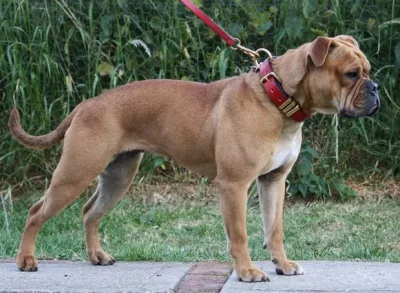
The Olde English Bulldogge is an American dog breed, recognized by the United Kennel Club (UKC) in January 2014. The breed is listed in the UKC Guardian Dog Group. Five years prior to UKC recognition, the breed was registered by the former Canine Developmental, Health and Performance Registry (CDHPR), a privately held business located in Kalamazoo, Michigan. In the early 2000s, CDHPR had been working with the UKC under a unique agreement to develop breeding plans and strategies in an effort to produce improved breeds of dogs that would be accepted as purebred and, therefore, eligible for UKC registration. In the early 1970s, dog breeder David Leavitt of Coatesville, Pennsylvania, wanted to "recreate a Bulldog with the looks, health and athleticism of the 18th Century Bulldog which was originally created for the English sport of bull baiting between the years 1100 to 1835". In an effort to rapidly achieve his goal for a purebred dog, Leavitt modeled his program after a livestock line breeding scheme developed by Nathan Fechimer, a professor in the Department of Dairy Science, Ohio State University. The result was an athletic breed that looks similar to the bulldogs of 1820, but with a friendly temperament, fewer health issues, and with longevity reaching into the teens. U.S. researchers have said the Olde English Bulldogge is a "viable candidate" as an outcross on which to rebuild the Bulldog; a breed that genetic studies have suggested is so inbred that it "cannot be returned to health without an infusion of new bloodlines."
| Life Span | 10-14 years |
| Weight | 10-30 kg |
What to Know Before Buying a Leavitt Bulldog
Finding a responsible Leavitt Bulldog breeder requires more than browsing classified ads or responding to social media posts. The USDA requires any breeder who sells dogs commercially, especially those selling online or through third-party dealers, to hold a federal license and submit to regular inspections. A legitimate breeder should be willing to provide their USDA license number, invite you to visit their facility, and show you where the animals are housed and socialized.
Before committing to a purchase, ask the breeder for veterinary health records, vaccination documentation, and any genetic testing results relevant to the Leavitt Bulldog. Reputable breeders will also ask you questions in return, about your living situation, experience with animals, and ability to provide long-term care. A breeder who asks no questions and is eager to ship an animal immediately is a significant red flag.
Use the search tool below to check whether any USDA-licensed facilities breeding Leavitt Bulldogs appear in our database. If they do, review their inspection history carefully. Look for patterns of violations, pay attention to severity levels, and compare their compliance grade with other breeders in the same state. This due diligence takes minutes and can save you from supporting a facility with documented animal welfare problems.
Looking for a Leavitt Bulldog breeder?
Search our database of USDA-licensed facilities to find inspected breeders and check their compliance history.
Search USDA Breeders