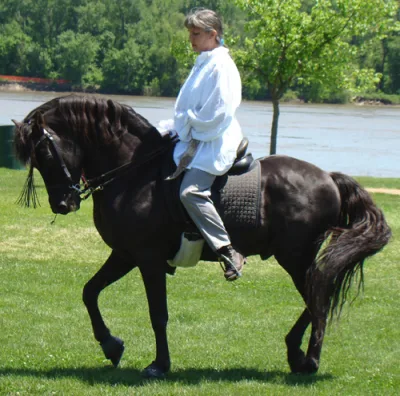
Lippitt Morgan
The Morgan horse is one of the earliest horse breeds developed in the United States. Tracing back to the foundation sire Figure, later named Justin Morgan after his best-known owner, Morgans served many roles in 19th-century American history, being used as coach horses and for harness racing, as general riding animals, and as cavalry horses during the American Civil War on both sides of the conflict. Morgans have influenced other major American breeds, including the American Quarter Horse, Tennessee Walking Horse and the Standardbred. During the 19th and 20th centuries, they were exported to other countries, including England, where a Morgan stallion influenced the breeding of the Hackney horse. In 1907, the US Department of Agriculture established the US Morgan Horse Farm near Middlebury, Vermont for the purpose of perpetuating and improving the Morgan breed; the farm was later transferred to the University of Vermont. The first breed registry was established in 1909, and since then many organizations in the US, Europe and Oceania have developed. There were estimated to be over 175,000 Morgan horses worldwide in 2005. The Morgan is a compact, refined breed, generally bay, black or chestnut in color, although they come in many colors, including several variations of pinto. Used in both English and Western disciplines, the breed is known for its versatility. The Morgan is the state animal of Vermont and the state horse of Massachusetts and the state mammal of Rhode Island. Popular children's authors, including Marguerite Henry and Ellen Feld, have portrayed the breed in their books; Henry's Justin Morgan Had a Horse was later made into a Disney movie.
| Life Span | 25-30 years |
| Weight | 380-550 kg |
What to Know Before Buying a Lippitt Morgan
Finding a responsible Lippitt Morgan breeder requires more than browsing classified ads or responding to social media posts. The USDA requires any breeder who sells horses commercially — especially those selling online or through third-party dealers — to hold a federal license and submit to regular inspections. A legitimate breeder should be willing to provide their USDA license number, invite you to visit their facility, and show you where the animals are housed and socialized.
Before committing to a purchase, ask the breeder for veterinary health records, vaccination documentation, and any genetic testing results relevant to the Lippitt Morgan. Reputable breeders will also ask you questions in return — about your living situation, experience with animals, and ability to provide long-term care. A breeder who asks no questions and is eager to ship an animal immediately is a significant red flag.
Use the search tool below to check whether any USDA-licensed facilities breeding Lippitt Morgans appear in our database. If they do, review their inspection history carefully. Look for patterns of violations, pay attention to severity levels, and compare their compliance grade with other breeders in the same state. This due diligence takes minutes and can save you from supporting a facility with documented animal welfare problems.
Looking for a Lippitt Morgan breeder?
Search our database of USDA-licensed facilities to find inspected breeders and check their compliance history.
Search USDA Breeders