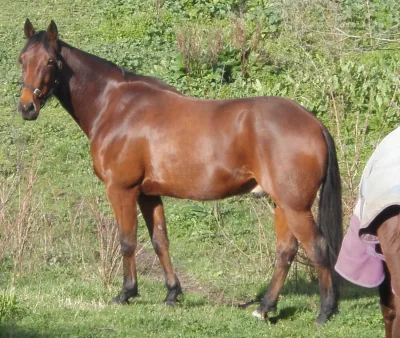
Mezen horse
The Mezen horse or Mezenok is a Russian breed of draft horse similar to the Pechora. It is nearly extinct; in 2005, there were only 1,000 Mezen horses left, and of that number only 64 were breeding. The Mezen horse originated in the northeastern part of the Arkhangelsk Oblast, between the Mezen and Pineg rivers. The Mezen was most likely developed by breeding together Estonian, Danish, Holsteins, Mecklenburgers, the Northern forest horse, and Finnish horses, as well as various types of trotters. In the last fifty years, Ardennes horses have begun to be bred into the existing stock. They have long bodies, wide chests, and a narrow, sloping croup. Their hind legs are often cow-hocked. Mezen horses come in bay, black, sorrel, brown, and gray coats. There are two types of Mezen, a lighter type with a dished face and a heavier type. They are noted for their resistance to insects. It is also stated that they can survive on a diet of moss and fish, and that if "it gets stuck in snow up to the chest, it can jump out, like a mouse." It is unclear if the origins of the Mezen horse lie in Prince V. V. Golitsyn bringing his stud horse to Arckhangelsk; in Peter the Great ordering stallions from Obvin to Mezen to improve the local horses; or in Catherine the Great ordering Danish horses be sent to the area. Mezen (mezenskie in Russian) horses are used as work horses in all types of agricultural works as well as in equestrian sport (show jumping (1 m level) and track), in hippo therapy, rescue teams. They are good partners for beginner riders and amateurs as amateur level horses. They are smart, clever and calm to take part in show and festivals successfully. They are also used as carriage horse: in traditional Russian carriage of 3 horses named "troika". High appreciated their ability to move freely through the deep snow (powder snow) and viscous soil. Therefore, it is very promising to use these horses to move the wood-fallen trees from the forest. All working qualities of mezen horses could be defined in a special competitions.
| Life Span | 25-30 years |
| Weight | 380-550 kg |
What to Know Before Buying a Mezen horse
Finding a responsible Mezen horse breeder requires more than browsing classified ads or responding to social media posts. The USDA requires any breeder who sells horses commercially — especially those selling online or through third-party dealers — to hold a federal license and submit to regular inspections. A legitimate breeder should be willing to provide their USDA license number, invite you to visit their facility, and show you where the animals are housed and socialized.
Before committing to a purchase, ask the breeder for veterinary health records, vaccination documentation, and any genetic testing results relevant to the Mezen horse. Reputable breeders will also ask you questions in return — about your living situation, experience with animals, and ability to provide long-term care. A breeder who asks no questions and is eager to ship an animal immediately is a significant red flag.
Use the search tool below to check whether any USDA-licensed facilities breeding Mezen horses appear in our database. If they do, review their inspection history carefully. Look for patterns of violations, pay attention to severity levels, and compare their compliance grade with other breeders in the same state. This due diligence takes minutes and can save you from supporting a facility with documented animal welfare problems.
Looking for a Mezen horse breeder?
Search our database of USDA-licensed facilities to find inspected breeders and check their compliance history.
Search USDA Breeders