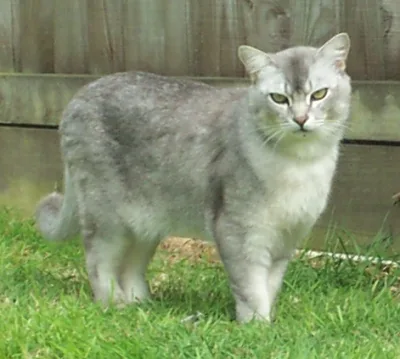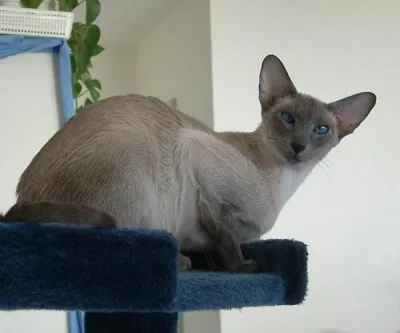
Modern Siamese
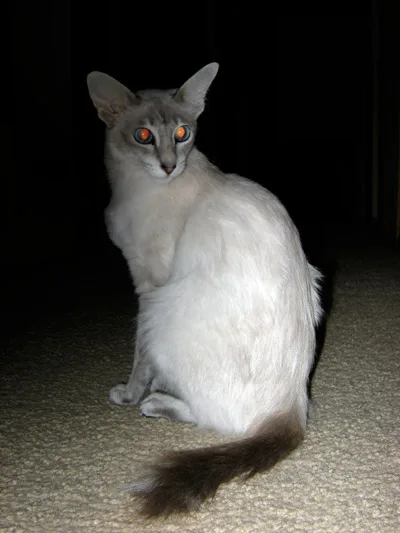
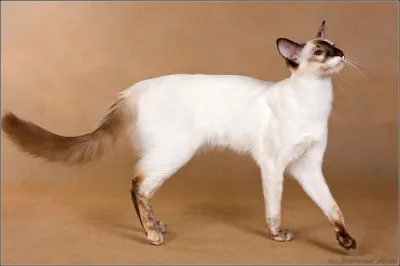
The Siamese cat (Thai: แมวไทย, Maeo Thai; แมวสยาม, Maeo Sayam; แมววิเชียรมาศ, Maeo Wichien Maat) is one of the first distinctly recognised breeds of domestic cat. It is selectively bred since the end of the 19th-century from the Wichianmat landrace, one of several varieties of cats native to Thailand (known as Siam before 1939), and is pedigreed in all major cat fancier and breeder organisations. Siamese cats have a distinctive colourpoint coat, resulting from a temperature-sensitive type of albinism. Distinct features like blue almond-shaped eyes, a triangular wedged head shape, large wide-set ears, an elongated, slender, and muscular body, and various colours of point colouration characterise the breed. The breed was one of the most popular cat breeds in Europe and North America in the 19th century. Around the 1950s, the modern-style body with slender and angular features became the preferred type by Siamese enthusiasts. From the 1980s onwards, the traditional "old-style" (rounder-built) cats started to officially split off from the (modern-style) Siamese breed and were re-established by multiple registries as the separate Thai cat breed. The terms "Siamese" or "Thai" are used for cats from these specific breeds, which are by definition all purebred cats with a known and formally registered ancestry, also known as the cat's pedigree or "paperwork". The Siamese is used as foundation stock in several new cat breeds; by crossbreeding them with other cats. The Oriental and Colourpoint Shorthair were developed to expand the range of Siamese coat patterns. Crossbreeding with Persians resulted in a long-haired colourpoint variant called the Himalayan. The long-haired Siamese is recognised internationally as the Balinese. Crossbreeding also introduced Siamese features in several hair-mutation breeds, including the Cornish Rex, Sphynx, and Peterbald.
| Life Span | 12-18 years |
| Weight | 3-6 kg |
What to Know Before Buying a Modern Siamese
Finding a responsible Modern Siamese breeder requires more than browsing classified ads or responding to social media posts. The USDA requires any breeder who sells cats commercially, especially those selling online or through third-party dealers, to hold a federal license and submit to regular inspections. A legitimate breeder should be willing to provide their USDA license number, invite you to visit their facility, and show you where the animals are housed and socialized.
Before committing to a purchase, ask the breeder for veterinary health records, vaccination documentation, and any genetic testing results relevant to the Modern Siamese. Reputable breeders will also ask you questions in return, about your living situation, experience with animals, and ability to provide long-term care. A breeder who asks no questions and is eager to ship an animal immediately is a significant red flag.
Use the search tool below to check whether any USDA-licensed facilities breeding Modern Siameses appear in our database. If they do, review their inspection history carefully. Look for patterns of violations, pay attention to severity levels, and compare their compliance grade with other breeders in the same state. This due diligence takes minutes and can save you from supporting a facility with documented animal welfare problems.
Looking for a Modern Siamese breeder?
Search our database of USDA-licensed facilities to find inspected breeders and check their compliance history.
Search USDA Breeders