Namib Desert Horse
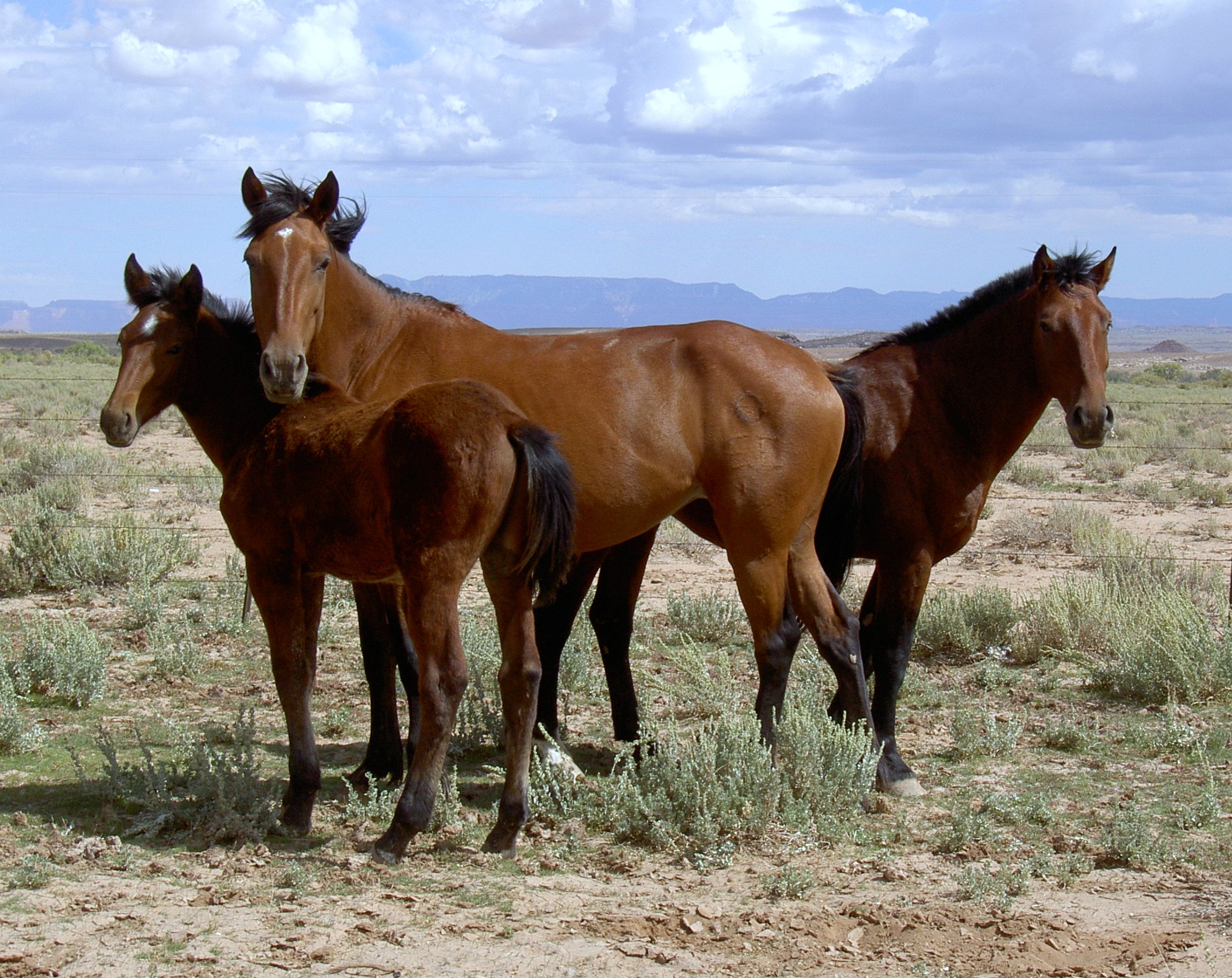
The Namib Desert horse (Afrikaans: Namib Woestyn Perd) is a feral horse found in the Namib Desert of Namibia. It is one of the two feral herd of horses ( the other being the Kundudo horses from Ethiopia) residing in Africa, with a population ranging between 90 and 150. The Namib Desert horse is athletic in appearance, resembling the European light riding horses from which it probably descends, and usually dark in color. Despite the harsh environment in which they live, the horses are generally in good condition, except during times of extreme drought. The horses have been the subject of several population studies, which have given significant insight into their population dynamics and ability to survive in desert conditions. The origin of the Namib Desert horse is unclear, though several theories have been put forward. Genetic tests have been performed, although none to date have completely verified their origin. The most likely ancestors of the horses are a mix of riding horses and cavalry horses, many from German breeding programs, released from various farms and camps in the early 20th century, especially during World War I. Whatever their origin, the horses eventually congregated in the Garub Plains, near Aus, Namibia, the location of a man-made water source. They were generally ignored by humans, except for the periodic threat of eradication, due to the possibility that they were destroying native herbivore habitat, until the 1980s. In 1984, the first aerial survey of the population was made, and in 1986, their traditional grazing land was incorporated into the Namib-Naukluft Park. At several points, some horses have been removed from the herd, including the removal and sale of over one-third of the population in 1992. Since the early 1990s, close records of the population have been kept, and studies have been performed to determine the horses' effect on their environment. Despite being considered an exotic species within the park, they are allowed to remain due to their ties to the country's history and draw as a tourist attraction.
| Life Span | 25-30 years |
| Weight | 380-550 kg |
What to Know Before Buying a Namib Desert Horse
Finding a responsible Namib Desert Horse breeder requires more than browsing classified ads or responding to social media posts. The USDA requires any breeder who sells horses commercially — especially those selling online or through third-party dealers — to hold a federal license and submit to regular inspections. A legitimate breeder should be willing to provide their USDA license number, invite you to visit their facility, and show you where the animals are housed and socialized.
Before committing to a purchase, ask the breeder for veterinary health records, vaccination documentation, and any genetic testing results relevant to the Namib Desert Horse. Reputable breeders will also ask you questions in return — about your living situation, experience with animals, and ability to provide long-term care. A breeder who asks no questions and is eager to ship an animal immediately is a significant red flag.
Use the search tool below to check whether any USDA-licensed facilities breeding Namib Desert Horses appear in our database. If they do, review their inspection history carefully. Look for patterns of violations, pay attention to severity levels, and compare their compliance grade with other breeders in the same state. This due diligence takes minutes and can save you from supporting a facility with documented animal welfare problems.
Looking for a Namib Desert Horse breeder?
Search our database of USDA-licensed facilities to find inspected breeders and check their compliance history.
Search USDA Breeders