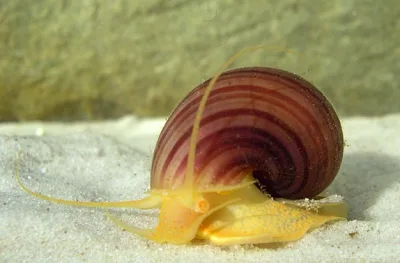
Neocaridina davidi
Neocaridina davidi, also known as the cherry shrimp, is a freshwater shrimp native to Taiwan, east of China, the Korean Peninsula, and Vietnam, that is sold globally in the aquatic pet trade. They are omnivores, and their natural habitat in these regions include inland water bodies such as lakes, ponds, rivers, and streams. N. davidi is also able to tolerate a wide range of environmental conditions, and as a result of this is also becoming invasive in thermally polluted waterways of Japan, the United States, Poland, and Germany. It is thought that the release of captive shrimp has led to their presence in these environments. Their natural coloration, or wild type, is a mottled brown, but N. davidi has been selectively bred to produce a diverse array of color morphs including red, orange, yellow, green, blue, violet, white, clear, and more. The popularity of the red morph has led to N. davidi also being known as "cherry shrimp". N. davidi do not have a distinct larval stage, reach maturity in 30 days, and may live 1–2 years. At maturity, the shrimp are approximately 3–4 cm in length.
| Life Span | 5-15 years |
What to Know Before Buying a Neocaridina davidi
Finding a responsible Neocaridina davidi breeder requires more than browsing classified ads or responding to social media posts. The USDA requires any breeder who sells fishs commercially — especially those selling online or through third-party dealers — to hold a federal license and submit to regular inspections. A legitimate breeder should be willing to provide their USDA license number, invite you to visit their facility, and show you where the animals are housed and socialized.
Before committing to a purchase, ask the breeder for veterinary health records, vaccination documentation, and any genetic testing results relevant to the Neocaridina davidi. Reputable breeders will also ask you questions in return — about your living situation, experience with animals, and ability to provide long-term care. A breeder who asks no questions and is eager to ship an animal immediately is a significant red flag.
Use the search tool below to check whether any USDA-licensed facilities breeding Neocaridina davidis appear in our database. If they do, review their inspection history carefully. Look for patterns of violations, pay attention to severity levels, and compare their compliance grade with other breeders in the same state. This due diligence takes minutes and can save you from supporting a facility with documented animal welfare problems.
Looking for a Neocaridina davidi breeder?
Search our database of USDA-licensed facilities to find inspected breeders and check their compliance history.
Search USDA Breeders