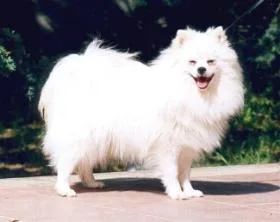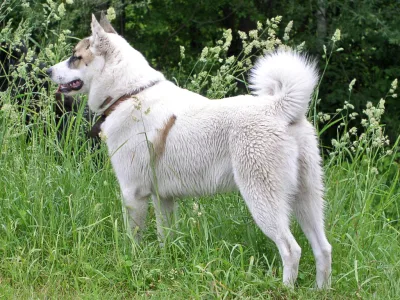
Northern terrier
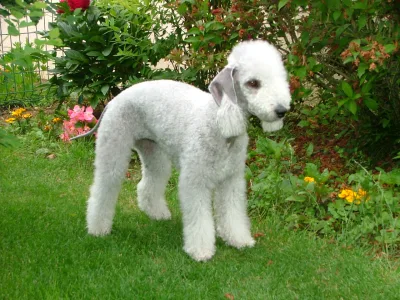
The Bedlington Terrier is a breed of small dog named after the mining town of Bedlington, Northumberland in North East England. Originally bred to hunt, the Bedlington Terrier has since been used in dog racing, numerous dog sports, as well as in conformation shows and as a companion dog. It is closely related to the Dandie Dinmont Terrier, Whippet and Otterhound. It is described as a very versatile yet contradictory dog. They have powerful swimming skills, comparable to those of water dogs such as the Newfoundland, and are noted for being very quick and having high endurance. They love snow, and can achieve a Husky-like turn of speed on ice or in deep powder, using their powerful noses as a plough. Bedlingtons are noted for their similarity in appearance to lambs. The dogs have blue, liver or sandy colouration, all three of which may have tan points. Their fur forms a distinctive top knot on the dog's head. It is nonshedding and with minimal odor but needs weekly grooming to remove dead hair. Originally known as the Rothbury or Rodbury Terrier, the name Bedlington Terrier was not applied to the breed until 1825, but some dogs have pedigrees that can be traced back as far as 1782. The first dog show with a class for Bedlington Terriers was held in 1870 at Bedlington. Bedlington Terriers shown at early shows were frequently dyed to improve the look of their fur. In 1948, a Bedlington Terrier known as Rock Ridge Night Rocket won best in show at the Westminster Kennel Club Dog Show. The breed has a high incidence of copper toxicosis.
| Life Span | 10-14 years |
| Weight | 10-30 kg |
What to Know Before Buying a Northern terrier
Finding a responsible Northern terrier breeder requires more than browsing classified ads or responding to social media posts. The USDA requires any breeder who sells dogs commercially, especially those selling online or through third-party dealers, to hold a federal license and submit to regular inspections. A legitimate breeder should be willing to provide their USDA license number, invite you to visit their facility, and show you where the animals are housed and socialized.
Before committing to a purchase, ask the breeder for veterinary health records, vaccination documentation, and any genetic testing results relevant to the Northern terrier. Reputable breeders will also ask you questions in return, about your living situation, experience with animals, and ability to provide long-term care. A breeder who asks no questions and is eager to ship an animal immediately is a significant red flag.
Use the search tool below to check whether any USDA-licensed facilities breeding Northern terriers appear in our database. If they do, review their inspection history carefully. Look for patterns of violations, pay attention to severity levels, and compare their compliance grade with other breeders in the same state. This due diligence takes minutes and can save you from supporting a facility with documented animal welfare problems.
Looking for a Northern terrier breeder?
Search our database of USDA-licensed facilities to find inspected breeders and check their compliance history.
Search USDA Breeders