Old Dutch Turbit
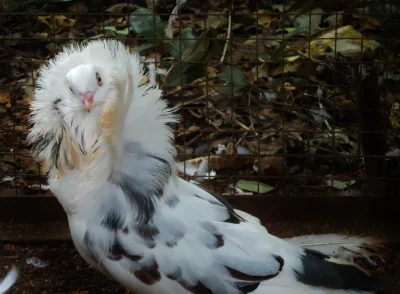
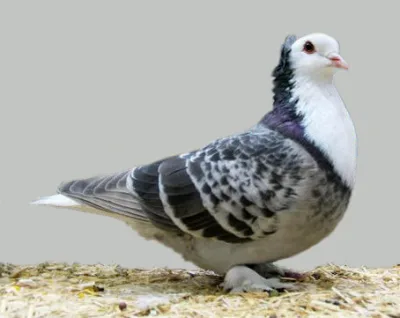
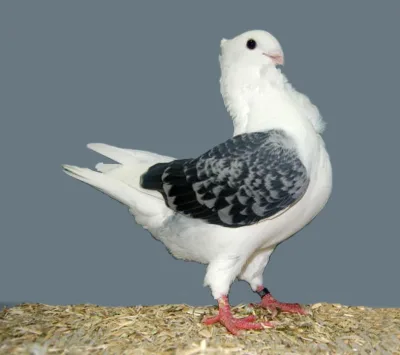
The Old Dutch owl, Old Dutch turbit, Old Dutch gull, or simply gull is a breed of fancy pigeon recognised as belonging to the owl pigeons breed group (EE0700 or individually as NL0/703) by the European Standard Committee for Pigeons. Additionally, it is recognised as belonging to the owls and frills breed group by the US National Pigeon Association. Developed in the Netherlands over generations of selective breeding, the old Dutch owl is characterised by vertically growing head feathers that curl gently, creating a peak at the rear of the head, a mane on the nape, and swooping feather adornments around the front of the neck (an area referred to in pigeon anatomy as the "jabot"). This breed possesses a rounded broad forehead, a stout or highly regressed beak likened to that of a bullfinch, large expressive eyes, and an upright posture. Old Dutch owls are characterised by glaucous coloured wing shields with black or dark greyish blue bars as well as an uncoloured white body and white primaries. The breed's name in Dutch is "oud Hollandse meeuw", meaning "old Dutch seagull", reflecting its superficially similar plumage to a seagull. The breed is also commonly referred to as the old Dutch Turbit, a term used to describe stout and stocky breeds of pigeon that was once exclusively applied to frilled pigeons with coloured shoulders.
| Life Span | 6-15 years |
| Weight | 0.2-0.5 kg |
What to Know Before Buying an Old Dutch Turbit
Finding a responsible Old Dutch Turbit breeder requires more than browsing classified ads or responding to social media posts. The USDA requires any breeder who sells pigeons commercially, especially those selling online or through third-party dealers, to hold a federal license and submit to regular inspections. A legitimate breeder should be willing to provide their USDA license number, invite you to visit their facility, and show you where the animals are housed and socialized.
Before committing to a purchase, ask the breeder for veterinary health records, vaccination documentation, and any genetic testing results relevant to the Old Dutch Turbit. Reputable breeders will also ask you questions in return, about your living situation, experience with animals, and ability to provide long-term care. A breeder who asks no questions and is eager to ship an animal immediately is a significant red flag.
Use the search tool below to check whether any USDA-licensed facilities breeding Old Dutch Turbits appear in our database. If they do, review their inspection history carefully. Look for patterns of violations, pay attention to severity levels, and compare their compliance grade with other breeders in the same state. This due diligence takes minutes and can save you from supporting a facility with documented animal welfare problems.
Looking for an Old Dutch Turbit breeder?
Search our database of USDA-licensed facilities to find inspected breeders and check their compliance history.
Search USDA Breeders