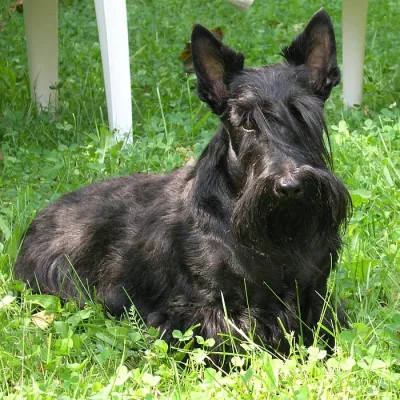
Scottish Terrier
The Scottish Terrier (Scottish Gaelic: Abhag Albannach; also known as the Aberdeen Terrier), popularly called the Scottie, is a breed of dog. Initially one of the highland breeds of terrier that were grouped under the name of Skye Terrier, it is one of five breeds of terrier that originated in Scotland, the other four being the modern Skye, Cairn, Dandie Dinmont, and West Highland White terriers. They are an independent and rugged breed with a wiry outer coat and a soft dense undercoat. The first Earl of Dumbarton nicknamed the breed "the diehard". According to legend, the Earl of Dumbarton gave this nickname because of the Scottish Terriers' bravery, and Scotties were also the inspiration for the name of his regiment, The Royal Scots, Dumbarton's Diehard. Scottish Terriers were originally bred to hunt vermin on farms. They are a small breed of terrier with a distinctive shape and have had many roles in popular culture. They have been owned by a variety of celebrities, including the 32nd president of the United States, Franklin Delano Roosevelt, whose Scottie Fala is included with FDR in a statue in Washington, D.C., as well as by the 43rd president, George W. Bush. They are also well known for being a playing piece in the board game Monopoly. Described as territorial, feisty dogs, they can make a good watchdog and tend to be very loyal to their family. Healthwise, Scottish Terriers can be more prone to bleeding disorders, joint disorders, autoimmune diseases, allergies, and cancer than some other breeds of dog, and there is a condition named after the breed called Scotty cramp. They are also one of the more successful dog breeds at the Westminster Kennel Club Dog Show with a best in show in 2010.
| Origin | Scotland |
| Life Span | 12-15 years |
| Weight | 8-10 kg |
What to Know Before Buying a Scottish Terrier
Finding a responsible Scottish Terrier breeder requires more than browsing classified ads or responding to social media posts. The USDA requires any breeder who sells dogs commercially, especially those selling online or through third-party dealers, to hold a federal license and submit to regular inspections. A legitimate breeder should be willing to provide their USDA license number, invite you to visit their facility, and show you where the animals are housed and socialized.
Before committing to a purchase, ask the breeder for veterinary health records, vaccination documentation, and any genetic testing results relevant to the Scottish Terrier. Reputable breeders will also ask you questions in return, about your living situation, experience with animals, and ability to provide long-term care. A breeder who asks no questions and is eager to ship an animal immediately is a significant red flag.
Use the search tool below to check whether any USDA-licensed facilities breeding Scottish Terriers appear in our database. If they do, review their inspection history carefully. Look for patterns of violations, pay attention to severity levels, and compare their compliance grade with other breeders in the same state. This due diligence takes minutes and can save you from supporting a facility with documented animal welfare problems.
Looking for a Scottish Terrier breeder?
Search our database of USDA-licensed facilities to find inspected breeders and check their compliance history.
Search USDA Breeders