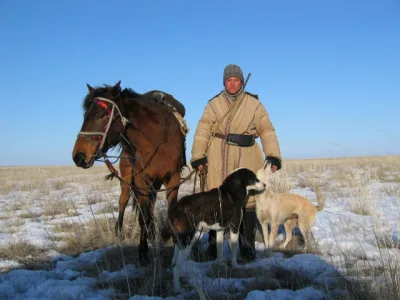
Spanish Mustang
The Spanish Mustang is an American horse breed descended from horses brought from Spain during the early conquest of the Americas. They are classified within the larger grouping of the Colonial Spanish horse, a type that today is rare in Spain. By the early 20th century, most of the once-vast herds of mustangs that had descended from the Spanish horses had been greatly reduced in size. Seeing that these horses were on the brink of extinction, some horseman began making efforts to find and preserve the remaining "Spanish Mustangs" drawing stock from feral and Native American herds, as well as ranch stock. The breed was one of the first to be part of a concerted preservation effort for horses of Spanish phenotype, and a breed registry was founded in 1957. The Spanish Mustang as a modern domesticated breed differs from the feral free-roaming mustang. The latter animals are descended from both Spanish horses and other domesticated horses escaped or released from various sources; many run wild in Herd Management Areas (HMAs) of the western United States, currently managed by the Bureau of Land Management (BLM). Some feral herds also exist in Canada. DNA studies indicate that Spanish breeding and type does still exist in some feral Mustang herds, including those on the Cerbat HMA (near Kingman, Arizona), Pryor Mountain HMA (Montana), Sulphur HMA (Utah), and Kiger HMA (Oregon).
| Life Span | 25-30 years |
| Weight | 380-550 kg |
What to Know Before Buying a Spanish Mustang
Finding a responsible Spanish Mustang breeder requires more than browsing classified ads or responding to social media posts. The USDA requires any breeder who sells horses commercially — especially those selling online or through third-party dealers — to hold a federal license and submit to regular inspections. A legitimate breeder should be willing to provide their USDA license number, invite you to visit their facility, and show you where the animals are housed and socialized.
Before committing to a purchase, ask the breeder for veterinary health records, vaccination documentation, and any genetic testing results relevant to the Spanish Mustang. Reputable breeders will also ask you questions in return — about your living situation, experience with animals, and ability to provide long-term care. A breeder who asks no questions and is eager to ship an animal immediately is a significant red flag.
Use the search tool below to check whether any USDA-licensed facilities breeding Spanish Mustangs appear in our database. If they do, review their inspection history carefully. Look for patterns of violations, pay attention to severity levels, and compare their compliance grade with other breeders in the same state. This due diligence takes minutes and can save you from supporting a facility with documented animal welfare problems.
Looking for a Spanish Mustang breeder?
Search our database of USDA-licensed facilities to find inspected breeders and check their compliance history.
Search USDA Breeders