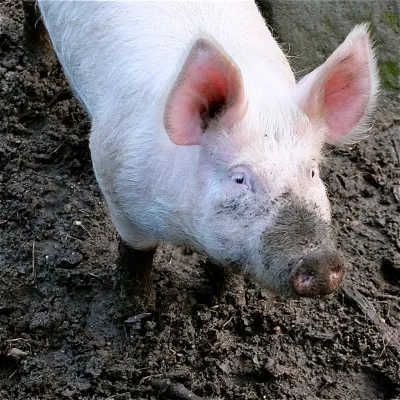
Tibetan pig
A miniature pig, minipig or micro-pig is a domestic pig characterised by its unusually small size when fully grown. Some breeds of miniature pig – such as the Cerdo Cuino of Mexico, the Lon I of Vietnam, the Ras-n-Lansa of Guam in the Marianas Islands and the Wuzhishan of Hainan Island in China – are traditional breeds of those areas. Many others have been selectively bred since the mid-twentieth century specifically for laboratory use in biomedical research; among these are the Clawn and the Ohmini of Japan, the Czech Minipig, the German Göttingen Minipig, the Lee-Sung of Taiwan, the Russian Minisib, the extinct Minnesota Miniature of the United States and the Westran of Australia. Some minipigs have been bred to be marketed as companion animals. Miniature pigs generally reach their full size in about four years, and may live for up to fifteen. Some may reach a height of 50 cm (20 in) at the shoulder and a body length of 100 cm (40 in).
| Life Span | 15-20 years |
| Weight | 50-350 kg |
What to Know Before Buying a Tibetan pig
Finding a responsible Tibetan pig breeder requires more than browsing classified ads or responding to social media posts. The USDA requires any breeder who sells pigs commercially — especially those selling online or through third-party dealers — to hold a federal license and submit to regular inspections. A legitimate breeder should be willing to provide their USDA license number, invite you to visit their facility, and show you where the animals are housed and socialized.
Before committing to a purchase, ask the breeder for veterinary health records, vaccination documentation, and any genetic testing results relevant to the Tibetan pig. Reputable breeders will also ask you questions in return — about your living situation, experience with animals, and ability to provide long-term care. A breeder who asks no questions and is eager to ship an animal immediately is a significant red flag.
Use the search tool below to check whether any USDA-licensed facilities breeding Tibetan pigs appear in our database. If they do, review their inspection history carefully. Look for patterns of violations, pay attention to severity levels, and compare their compliance grade with other breeders in the same state. This due diligence takes minutes and can save you from supporting a facility with documented animal welfare problems.
Looking for a Tibetan pig breeder?
Search our database of USDA-licensed facilities to find inspected breeders and check their compliance history.
Search USDA Breeders