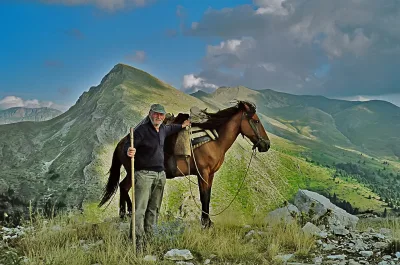
Trotter-type Finnhorse
The Finnhorse or Finnish Horse (Finnish: suomenhevonen [ˈsuo̯menˌheʋonen], literally "horse of Finland"; Swedish: finskt kallblod, literally "finnish cold-blood") is a horse breed with both riding horse and draught horse influences and characteristics, and is the only breed developed fully in Finland. In English it is sometimes called the Finnish Universal, as the Finns consider the breed capable of fulfilling all of Finland's horse needs, including agricultural and forestry work, harness racing, and riding. In 2007, the breed was declared the official national horse breed of Finland. The Finnhorse is claimed to be among the fastest and most versatile "coldblood" breeds in the world. In Finland, the term "universal horse" is used to describe the Finnhorse and breeds such as the Fjord horse that are relatively small with a body type that is heavy for a riding horse but light for a draught. There are four separate sections within the Finnhorse stud book, each with different goals: to develop a heavier working horse, a lighter trotter type, a versatile riding horse, and a pony-sized animal. The combined breed standard for all four sections defines the breed as a strong, versatile horse with pleasant disposition. The average height of the breed is 15.1 hands (61 inches, 155 cm), and the most typical colour is chestnut, often with white markings and a flaxen mane and tail. The exact origins of the early Finnish horse are currently not known. Because the Finnhorse breed and its progenitors were the only horses in Finland for centuries, the history of horses in Finland parallels the history of the Finnhorse itself. The documented history of the distinct breed begins at the turn of the 13th century. Outside influences by many light and warmblood breeds were recorded beginning in the 16th century, making the breed larger and more usable. An official Finnhorse studbook was founded in 1907, producing purebred animals in significant numbers for many years. Due to mechanisation of agriculture and the dismantling of Finnish horse cavalry in the late 20th century, the Finnhorse population plummeted from a high of just over 400,000 animals in the 1950s to a low of 14,100 in 1987. However, the breed managed to survive thanks to its popularity for harness racing and its versatility as a mount.
| Life Span | 25-30 years |
| Weight | 380-550 kg |
What to Know Before Buying a Trotter-type Finnhorse
Finding a responsible Trotter-type Finnhorse breeder requires more than browsing classified ads or responding to social media posts. The USDA requires any breeder who sells horses commercially — especially those selling online or through third-party dealers — to hold a federal license and submit to regular inspections. A legitimate breeder should be willing to provide their USDA license number, invite you to visit their facility, and show you where the animals are housed and socialized.
Before committing to a purchase, ask the breeder for veterinary health records, vaccination documentation, and any genetic testing results relevant to the Trotter-type Finnhorse. Reputable breeders will also ask you questions in return — about your living situation, experience with animals, and ability to provide long-term care. A breeder who asks no questions and is eager to ship an animal immediately is a significant red flag.
Use the search tool below to check whether any USDA-licensed facilities breeding Trotter-type Finnhorses appear in our database. If they do, review their inspection history carefully. Look for patterns of violations, pay attention to severity levels, and compare their compliance grade with other breeders in the same state. This due diligence takes minutes and can save you from supporting a facility with documented animal welfare problems.
Looking for a Trotter-type Finnhorse breeder?
Search our database of USDA-licensed facilities to find inspected breeders and check their compliance history.
Search USDA Breeders