Welsh Hillman
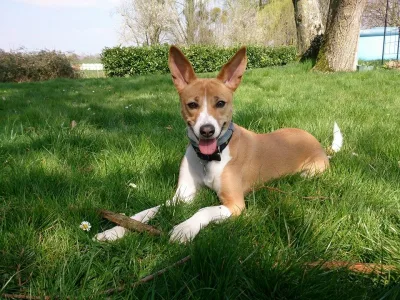
The Welsh Hillman was an ancient landrace or type of herding dog in Wales, used for herding and droving. The variety was thought to have become extinct around 1990. The Welsh Hillman was thought to have been descended from ancient Welsh herding dogs. It was possibly the oldest Welsh sheepdog, and may have been the descendant of the old gellgi or "Welsh wolfhounds" used around 1,000 years ago. Some sources, without any obvious evidence, suggest it was crossbred with similar dogs seen in North Africa. It was a large but rangy dog, up to approximately 25 in (64 cm) in height, and described as "fast and fearless", with an appearance not unlike a lighter-built German Shepherd. The ears were pricked. The coat was usually of a light fawn, sandy or red-gold colour with a black saddle, a white chest, white on the legs and the tip of the tail and a blaze on the face. Blue merle dogs were also occasionally seen. The breed was uncommon in modern times. C. L. B. Hubbard, writing in 1948, described it as "almost extinct" and "scarcely ever seen working today". The last known Welsh Hillman, "Jess", was purchased in 1974 from a hill farm near Hay-on-Wye by the author and broadcaster Jeanine McMullen, and was spayed before her owner realised her rarity.
| Life Span | 10-14 years |
| Weight | 10-30 kg |
What to Know Before Buying a Welsh Hillman
Finding a responsible Welsh Hillman breeder requires more than browsing classified ads or responding to social media posts. The USDA requires any breeder who sells dogs commercially, especially those selling online or through third-party dealers, to hold a federal license and submit to regular inspections. A legitimate breeder should be willing to provide their USDA license number, invite you to visit their facility, and show you where the animals are housed and socialized.
Before committing to a purchase, ask the breeder for veterinary health records, vaccination documentation, and any genetic testing results relevant to the Welsh Hillman. Reputable breeders will also ask you questions in return, about your living situation, experience with animals, and ability to provide long-term care. A breeder who asks no questions and is eager to ship an animal immediately is a significant red flag.
Use the search tool below to check whether any USDA-licensed facilities breeding Welsh Hillmans appear in our database. If they do, review their inspection history carefully. Look for patterns of violations, pay attention to severity levels, and compare their compliance grade with other breeders in the same state. This due diligence takes minutes and can save you from supporting a facility with documented animal welfare problems.
Looking for a Welsh Hillman breeder?
Search our database of USDA-licensed facilities to find inspected breeders and check their compliance history.
Search USDA Breeders