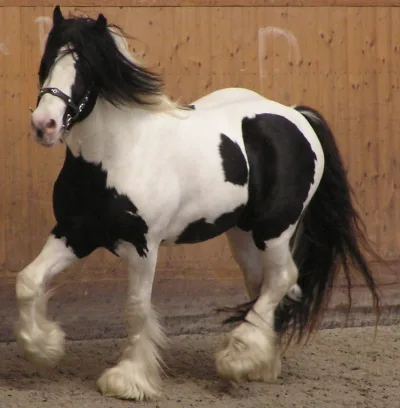
Windsor Grey
Windsor Grey is a moniker for the grey horses used by the British monarchy to pull carriages and state coaches in ceremonial processions such as those for coronations, royal weddings, Trooping the Colour, and the opening of Parliament. They are named for Windsor Castle where they were originally stabled, though today they live at the Royal Mews near Buckingham Palace. Windsor Greys and Cleveland Bays make up the majority of the royal carriage horses. The Greys are not a breed, but are of warmblood type of at least 16.1 hands (65 inches, 165 cm) height. The horses are broke to ride at 4 years old, and two years later, they are trained to harness. In order to be safe in the crowds they will experience in their 10 years of service, a placid temperament is mandatory, layered with extensive desensitization training. Queen Victoria began the use of Windsor Grey horses to pull the royal carriages during her reign (1837-1901), and all subsequent British monarchs have continued the tradition. Most Windsor Greys are purebred or crossbred Irish Draught horses from Ireland, though some horses are bred at Hampton Court. Two Windsor Greys pulled the procession carriage through Windsor for the 2018 wedding of Prince Harry and Meghan Markle. For the 2023 coronation of Charles III, six Windsor Greys drew the three-tonne Diamond Jubilee State Coach from Buckingham Palace to Westminster Abbey with three postilion riders, then eight Greys with four postilion drew the heavy four-tonne Gold State Coach back to the palace. In the mid-1970s, the early days of the sport of combined driving, Crown Equerry Sir John Miller and Prince Philip, Duke of Edinburgh both competed with teams of four Greys from the Royal Mews.
| Life Span | 25-30 years |
| Weight | 380-550 kg |
What to Know Before Buying a Windsor Grey
Finding a responsible Windsor Grey breeder requires more than browsing classified ads or responding to social media posts. The USDA requires any breeder who sells horses commercially — especially those selling online or through third-party dealers — to hold a federal license and submit to regular inspections. A legitimate breeder should be willing to provide their USDA license number, invite you to visit their facility, and show you where the animals are housed and socialized.
Before committing to a purchase, ask the breeder for veterinary health records, vaccination documentation, and any genetic testing results relevant to the Windsor Grey. Reputable breeders will also ask you questions in return — about your living situation, experience with animals, and ability to provide long-term care. A breeder who asks no questions and is eager to ship an animal immediately is a significant red flag.
Use the search tool below to check whether any USDA-licensed facilities breeding Windsor Greys appear in our database. If they do, review their inspection history carefully. Look for patterns of violations, pay attention to severity levels, and compare their compliance grade with other breeders in the same state. This due diligence takes minutes and can save you from supporting a facility with documented animal welfare problems.
Looking for a Windsor Grey breeder?
Search our database of USDA-licensed facilities to find inspected breeders and check their compliance history.
Search USDA Breeders