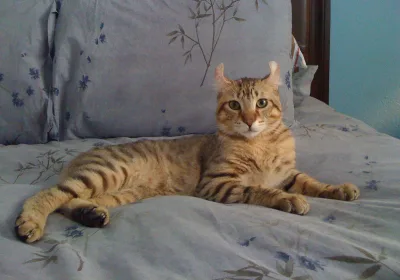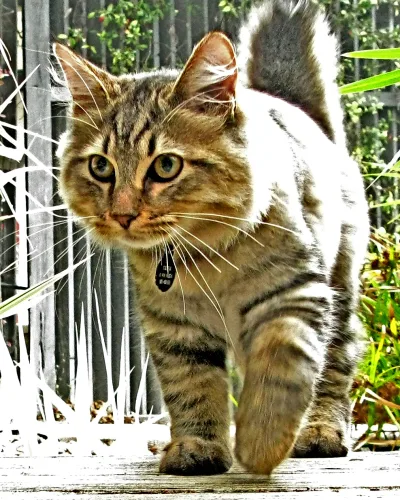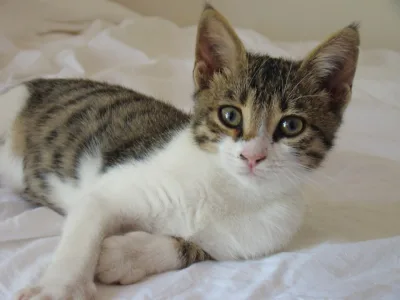
Aphrodite's Giant
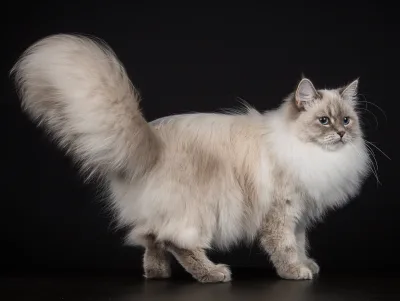
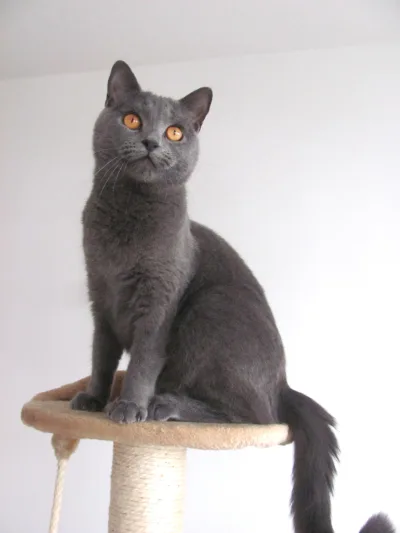
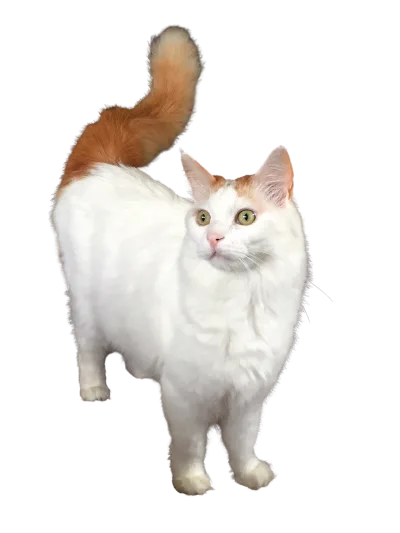
Cyprus cats, also known as Cypriot cats, Saint Helen cats, and Saint Nicholas cats, are a landrace of domestic cat found across the island of Cyprus. A standardised breed is being developed by selectively breeding the Cyprus cat landrace; among cat fancier and breeder organisations, it is presently fully recognised by the World Cat Federation (WCF) under the name Aphrodite's Giant; and provisionally by The International Cat Association (TICA) as the Aphrodite. Both organisations permit shorthaired and semi-longhaired versions and no out-crossing to other breeds. The earliest known written record of cats on Cyprus refers to a story of Saint Helen of Constantinople sending two boatloads of cats to a monastery on the island from Ancient Egypt or Palestine in the 4th century AD to deal with an infestation of snakes. Cats on Cyprus have been able to breed for centuries with comparatively little outside influence; this has resulted in a distinct, locally adapted variety of cat which appears to have developed as a feral population in the inner highlands, though is found throughout the island in modern times. While wildcats in association with humans on Cyprus date to at least 7500 BC – the earliest proven association of cats with humans – there is no known connection between those ancient tamed-wild specimens and modern domesticated Cyprus cats, despite breeder claims to the contrary.
| Life Span | 12-18 years |
| Weight | 3-6 kg |
What to Know Before Buying an Aphrodite's Giant
Finding a responsible Aphrodite's Giant breeder requires more than browsing classified ads or responding to social media posts. The USDA requires any breeder who sells cats commercially, especially those selling online or through third-party dealers, to hold a federal license and submit to regular inspections. A legitimate breeder should be willing to provide their USDA license number, invite you to visit their facility, and show you where the animals are housed and socialized.
Before committing to a purchase, ask the breeder for veterinary health records, vaccination documentation, and any genetic testing results relevant to the Aphrodite's Giant. Reputable breeders will also ask you questions in return, about your living situation, experience with animals, and ability to provide long-term care. A breeder who asks no questions and is eager to ship an animal immediately is a significant red flag.
Use the search tool below to check whether any USDA-licensed facilities breeding Aphrodite's Giants appear in our database. If they do, review their inspection history carefully. Look for patterns of violations, pay attention to severity levels, and compare their compliance grade with other breeders in the same state. This due diligence takes minutes and can save you from supporting a facility with documented animal welfare problems.
Looking for an Aphrodite's Giant breeder?
Search our database of USDA-licensed facilities to find inspected breeders and check their compliance history.
Search USDA Breeders