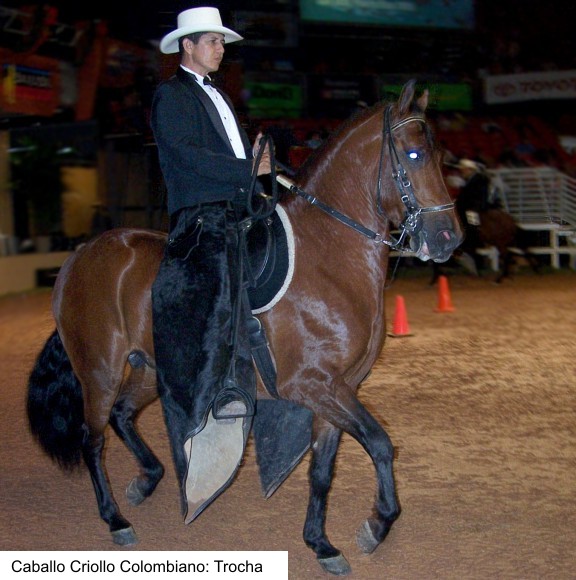
Hequ horse
The Hequ horse, previously called the Nanfan, is a horse breed native to the northwestern Tibetan plateau. Its ancestry traces to the Tang dynasty, influenced by the Tibetan pony, the Ferghana and the Mongolian horse. It was given its present name in 1954, from the Chinese word for its native region on the first loop of the Yellow River. Once common, the Hequ fell victim to Chinese policy and the mechanization of transportation. It is divided into three types: the Jiaoke, the Suoke, and Kesheng. It has remarkable physiological adaptation, following strong pressure from natural selection, allowing them to live in hypoxic environments (in) the Tibetan plateau at altitudes of 4000 m. The Hequ shows great versatility, being present as at Tibetan local races for the religious use or herd management. The Chinese authorities are seeking to develop its livestock for meat. The breed remains common; thousands of these horses are still commonly found in areas of Maqu, Luqu and Xiahe.
| Life Span | 25-30 years |
| Weight | 380-550 kg |
What to Know Before Buying a Hequ horse
Finding a responsible Hequ horse breeder requires more than browsing classified ads or responding to social media posts. The USDA requires any breeder who sells horses commercially — especially those selling online or through third-party dealers — to hold a federal license and submit to regular inspections. A legitimate breeder should be willing to provide their USDA license number, invite you to visit their facility, and show you where the animals are housed and socialized.
Before committing to a purchase, ask the breeder for veterinary health records, vaccination documentation, and any genetic testing results relevant to the Hequ horse. Reputable breeders will also ask you questions in return — about your living situation, experience with animals, and ability to provide long-term care. A breeder who asks no questions and is eager to ship an animal immediately is a significant red flag.
Use the search tool below to check whether any USDA-licensed facilities breeding Hequ horses appear in our database. If they do, review their inspection history carefully. Look for patterns of violations, pay attention to severity levels, and compare their compliance grade with other breeders in the same state. This due diligence takes minutes and can save you from supporting a facility with documented animal welfare problems.
Looking for a Hequ horse breeder?
Search our database of USDA-licensed facilities to find inspected breeders and check their compliance history.
Search USDA Breeders