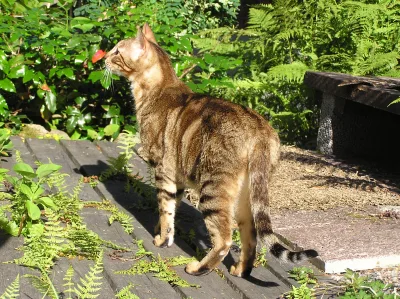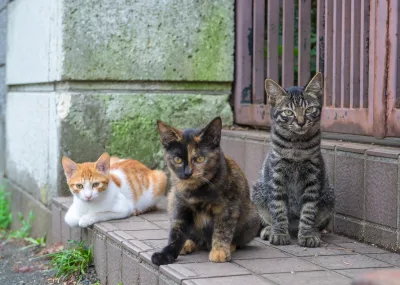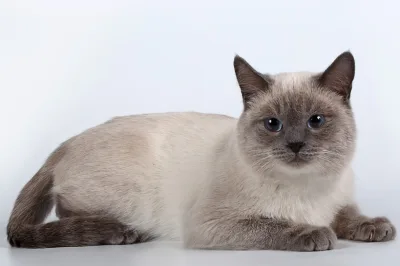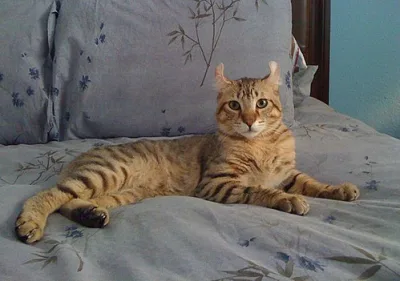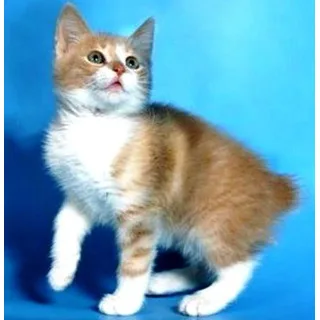
Karelian Bobtail
Domestic cats have been diversified by humans into breeds and domestic and wild hybrids. Many such breeds are recognized by various cat registries. Additionally, there are new and experimental breeds, landraces being established as standardized breeds, distinct domestic populations not being actively developed and lapsed (extinct) breeds. As of 2023, the International Cat Association (TICA) recognizes 75 standardized breeds, the Cat Fanciers' Association (CFA) recognizes 45, the Fédération Internationale Féline (FIFe) recognizes 50, the Governing Council of the Cat Fancy (GCCF) recognizes 45, and the World Cat Federation (WCF) recognizes 69. Inconsistency in a breed's classification and naming among registries means that an individual animal may be considered different breeds by different registries (though not necessarily eligible for registry in them all, depending on its exact ancestry). For example, TICA's Himalayan is considered a colorpoint variety of the Persian by the CFA, while the Javanese, (or Colorpoint Longhair) is a color variation of the Balinese in both the TICA and the CFA; both breeds are merged (along with the Colorpoint Shorthair) into a single "mega-breed", the Colourpoint, by the World Cat Federation (WCF), who have repurposed the name "Javanese" for the Oriental Longhair. Also, "Colourpoint Longhair" refers to different breeds in other registries. There are many examples of nomenclatural overlap and differences of this sort. Furthermore, many geographical and cultural names for cat breeds are fanciful selections made by Western breeders to sound exotic and bear no relationship to the actual origin of the breeds; the Balinese, Javanese, and Himalayan are all examples of this trend. The domestic short-haired and domestic long-haired cat types are not breeds, but terms used (with various spellings) in the cat fancy to describe random-bred, non-pedigree "moggy" or "household" cats by coat length, ones that do not belong to a particular breed. Some registries such as the Cat Fanciers' Association allow for domestic short hairs and domestic long hairs to be registered for the purpose of outcrossing. They should not be confused with standardized breeds with similar names, such as the British Shorthair and Oriental Longhair.
| Life Span | 12-18 years |
| Weight | 3-6 kg |
What to Know Before Buying a Karelian Bobtail
Finding a responsible Karelian Bobtail breeder requires more than browsing classified ads or responding to social media posts. The USDA requires any breeder who sells cats commercially, especially those selling online or through third-party dealers, to hold a federal license and submit to regular inspections. A legitimate breeder should be willing to provide their USDA license number, invite you to visit their facility, and show you where the animals are housed and socialized.
Before committing to a purchase, ask the breeder for veterinary health records, vaccination documentation, and any genetic testing results relevant to the Karelian Bobtail. Reputable breeders will also ask you questions in return, about your living situation, experience with animals, and ability to provide long-term care. A breeder who asks no questions and is eager to ship an animal immediately is a significant red flag.
Use the search tool below to check whether any USDA-licensed facilities breeding Karelian Bobtails appear in our database. If they do, review their inspection history carefully. Look for patterns of violations, pay attention to severity levels, and compare their compliance grade with other breeders in the same state. This due diligence takes minutes and can save you from supporting a facility with documented animal welfare problems.
Looking for a Karelian Bobtail breeder?
Search our database of USDA-licensed facilities to find inspected breeders and check their compliance history.
Search USDA Breeders