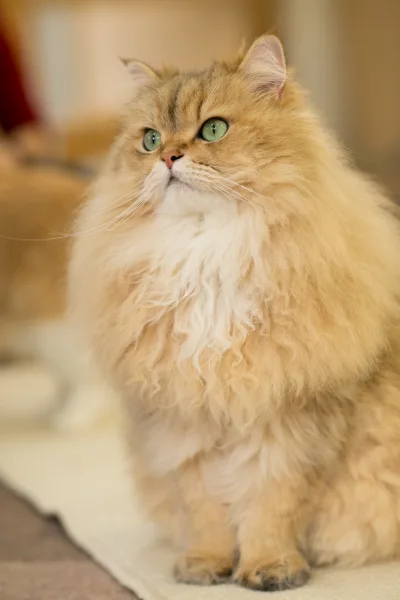
Traditional Persian
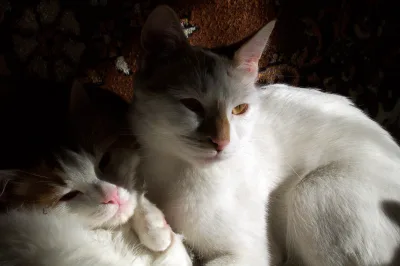
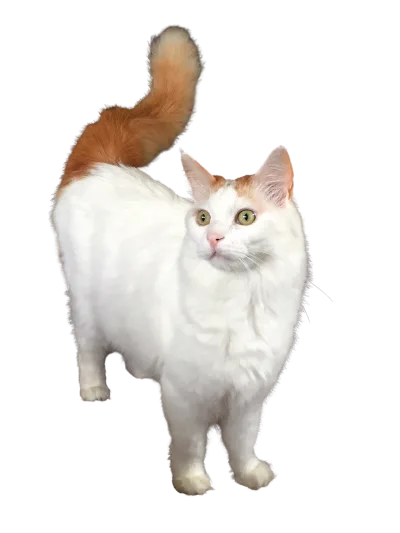
Traditional Persian is one of several names for a group of cats that are considered to be essentially the original breed of Persian cat, before the variety was selectively bred to have extreme features. Other everyday usage names are: Doll Face Persian, Classic Persian, Old Fashioned Persian, Long-nosed Persian, Old-style Longhair, Traditional Longhair and Original Longhair. The physical appearance of this domestic cat breed barely changed when compared to photos dating back to the late 1800s. However, since some breeders in the United States and other parts of the world introduced the brachycephalic mutation into the breed, the short nose and clear break became shorter and higher. This resulted in the modification of the original Persian breed standard so that modern show quality Persians must have pushed-in faces. This resulted in the breed disappearing from cat shows. However, this older form of Persian cat was made iconic to the general public through its use in popular films, even as it was being phased out in the cat fancy. For example, the Traditional Persian has been featured in eight of the James Bond movies, beginning with "From Russia with Love" in 1963. It was also featured in the kung fu cult classic Enter the Dragon.
| Life Span | 12-18 years |
| Weight | 3-6 kg |
What to Know Before Buying a Traditional Persian
Finding a responsible Traditional Persian breeder requires more than browsing classified ads or responding to social media posts. The USDA requires any breeder who sells cats commercially, especially those selling online or through third-party dealers, to hold a federal license and submit to regular inspections. A legitimate breeder should be willing to provide their USDA license number, invite you to visit their facility, and show you where the animals are housed and socialized.
Before committing to a purchase, ask the breeder for veterinary health records, vaccination documentation, and any genetic testing results relevant to the Traditional Persian. Reputable breeders will also ask you questions in return, about your living situation, experience with animals, and ability to provide long-term care. A breeder who asks no questions and is eager to ship an animal immediately is a significant red flag.
Use the search tool below to check whether any USDA-licensed facilities breeding Traditional Persians appear in our database. If they do, review their inspection history carefully. Look for patterns of violations, pay attention to severity levels, and compare their compliance grade with other breeders in the same state. This due diligence takes minutes and can save you from supporting a facility with documented animal welfare problems.
Looking for a Traditional Persian breeder?
Search our database of USDA-licensed facilities to find inspected breeders and check their compliance history.
Search USDA Breeders