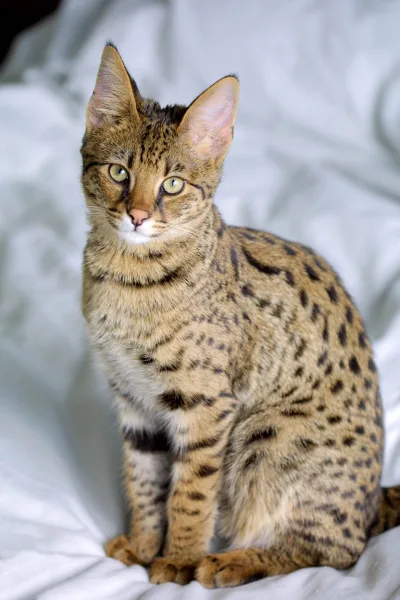
Savannah
A savanna or savannah is a mixed woodland-grassland (i.e. grassy woodland) biome and ecosystem characterised by the trees being sufficiently widely spaced so that the canopy does not close. The open canopy allows sufficient light to reach the ground to support an unbroken herbaceous layer consisting primarily of grasses. Four savanna forms exist; savanna woodland, where trees and shrubs form a light canopy; tree savanna, with scattered trees and shrubs; shrub savanna, with distributed shrubs; and grass savanna, where trees and shrubs are mostly nonexistent. Savannas maintain an open canopy despite a high tree density. It is often believed that savannas feature widely spaced, scattered trees. However, in many savannas, tree densities are higher and trees are more regularly spaced than in forests. The South American savanna types cerrado sensu stricto and cerrado dense typically have densities of trees similar to or higher than that found in South American tropical forests, with savanna ranging from 800 to 3300 trees per hectare (trees/ha) and adjacent forests with 800–2000 trees/ha. Similarly Guinean savanna has 129 trees/ha, compared to 103 for riparian forest, while Eastern Australian sclerophyll forests have average tree densities of approximately 100 per hectare, comparable to savannas in the same region. Savannas are also characterised by seasonal water availability, with the majority of rainfall confined to one season. They are associated with several types of biomes, and are frequently in a transitional zone between forest and desert or grassland, though mostly a transition between desert to forest. Savanna covers approximately 20% of the Earth's land area. Unlike the prairies in North America and steppes in Eurasia, which feature cold winters, savannas are mostly located in areas having warm to hot climates, such as in Africa, Australia, South America, and India.
| Origin | United States |
| Life Span | 12-20 years |
| Weight | 5-11 kg |
What to Know Before Buying a Savannah
Finding a responsible Savannah breeder requires more than browsing classified ads or responding to social media posts. The USDA requires any breeder who sells cats commercially, especially those selling online or through third-party dealers, to hold a federal license and submit to regular inspections. A legitimate breeder should be willing to provide their USDA license number, invite you to visit their facility, and show you where the animals are housed and socialized.
Before committing to a purchase, ask the breeder for veterinary health records, vaccination documentation, and any genetic testing results relevant to the Savannah. Reputable breeders will also ask you questions in return, about your living situation, experience with animals, and ability to provide long-term care. A breeder who asks no questions and is eager to ship an animal immediately is a significant red flag.
Use the search tool below to check whether any USDA-licensed facilities breeding Savannahs appear in our database. If they do, review their inspection history carefully. Look for patterns of violations, pay attention to severity levels, and compare their compliance grade with other breeders in the same state. This due diligence takes minutes and can save you from supporting a facility with documented animal welfare problems.
Looking for a Savannah breeder?
Search our database of USDA-licensed facilities to find inspected breeders and check their compliance history.
Search USDA Breeders