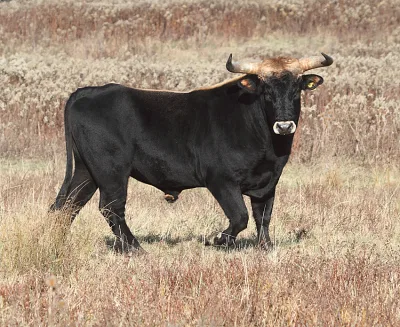
Taurus cattle
Cattle (Bos taurus) are large, domesticated, bovid ungulates widely kept as livestock. They are prominent modern members of the subfamily Bovinae and the most widespread species of the genus Bos. Mature female cattle are called cows and mature males are called bulls. Taurine cattle are widely distributed across Europe and temperate areas of Asia, the Americas, and Australia. Zebus are found mainly in India and tropical areas of Asia, America, and Australia. Sanga cattle are found primarily in sub-Saharan Africa. These types, sometimes classified as separate species or subspecies, are further divided into over 1,000 recognized breeds. Cattle are commonly raised for meat, for dairy products, and for leather. As draft animals, they pull carts and farm implements. Cattle are considered sacred animals within Hinduism, and it is illegal to kill them in some parts of the Indian subcontinent. Small breeds such as the miniature Zebu are kept as pets. Around 10,500 years ago, taurine cattle were domesticated from wild aurochs progenitors in central Anatolia, the Levant and Western Iran. A separate domestication event occurred in the Indian subcontinent, which gave rise to zebu. There were over 940 million cattle in the world by 2022. Cattle farming is responsible for around 7% of global greenhouse gas emissions. They were one of the first domesticated animals to have a fully-mapped genome.
| Life Span | 18-22 years |
| Weight | 450-900 kg |
What to Know Before Buying a Taurus cattle
Finding a responsible Taurus cattle breeder requires more than browsing classified ads or responding to social media posts. The USDA requires any breeder who sells cattles commercially — especially those selling online or through third-party dealers — to hold a federal license and submit to regular inspections. A legitimate breeder should be willing to provide their USDA license number, invite you to visit their facility, and show you where the animals are housed and socialized.
Before committing to a purchase, ask the breeder for veterinary health records, vaccination documentation, and any genetic testing results relevant to the Taurus cattle. Reputable breeders will also ask you questions in return — about your living situation, experience with animals, and ability to provide long-term care. A breeder who asks no questions and is eager to ship an animal immediately is a significant red flag.
Use the search tool below to check whether any USDA-licensed facilities breeding Taurus cattles appear in our database. If they do, review their inspection history carefully. Look for patterns of violations, pay attention to severity levels, and compare their compliance grade with other breeders in the same state. This due diligence takes minutes and can save you from supporting a facility with documented animal welfare problems.
Looking for a Taurus cattle breeder?
Search our database of USDA-licensed facilities to find inspected breeders and check their compliance history.
Search USDA Breeders